
Checkmate ITTech perceives Types of Debugging as a crucial aspect of cybersecurity that entails discovering, analyzing, and remedying vulnerabilities, incorrect system configurations, and logical defects in system software, application software, and computer networks. As the current cybersecurity threat landscape constantly changes, debugging is not merely a tool for software development; it has become a fundamental defense mechanism for cybersecurity specialists.
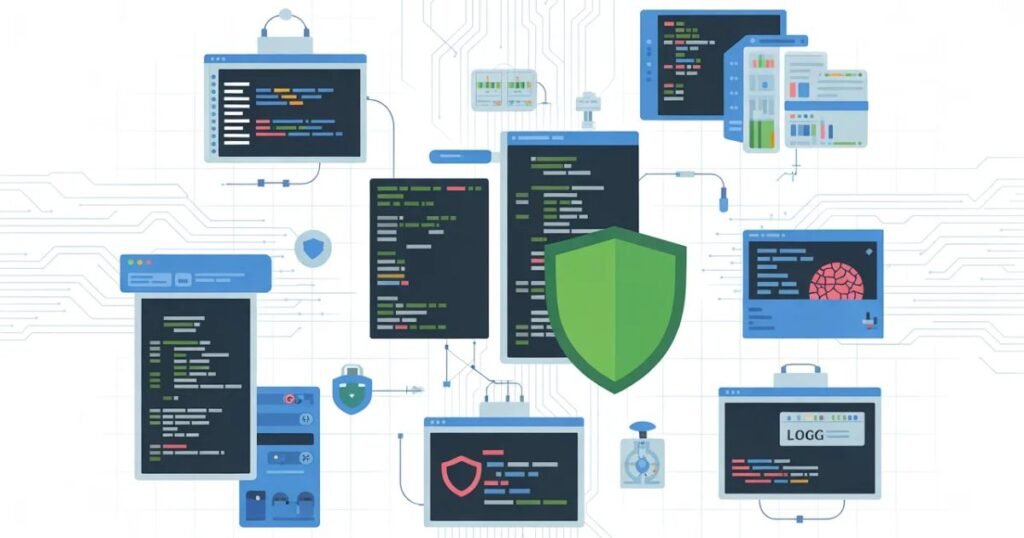
The effective application of debugging can protect against data breaches, enhance the integrity of a system, and help speed up incident responses. In Checkmate ITTech, students are trained on the understanding of systematic debugging approaches to foster analytical and problem-solving skills for global security positions.
Types of Debugging
Static Debugging
This is one of the first methods of security analysis, involving static examination of source code, binary executable files, or configurations without executing the application. By using this approach, security specialists can easily discover a wide variety of vulnerabilities, including hardcoded passwords, inadequate input validation, and unsecured encryption methods. Given that static debugging doesn’t execute the application, the risk of compromise is significantly minimized and vulnerabilities are detected during the early stages of the development cycle. In Checkmate ITTech, trainees will practice performing static debugging through the simulation of common vulnerabilities to gain the ability to conduct application security analysis.
Dynamic Debugging
Dynamic debugging happens during the execution of an application, allowing the analyst to examine its real-time behavior. This method is especially helpful for identifying vulnerabilities that appear during application run-time that cannot be discovered with static debugging, for instance, errors related to session handling, improper handling of user input, and logical flaws. In web application security training, Checkmate ITTech highlights dynamic debugging as a tool to expose unknown vulnerabilities and boost security at run time.

Interactive Debugging
This advanced form of debugging offers deep insight into the application process by allowing analysts to halt program execution at a given point and subsequently examine the program’s state such as the values of variables in the stack and registers. This technique is particularly valuable in reverse engineering and malware analysis, helping security specialists to grasp the internal operation of a piece of malware. Through step-by-step analysis and system state monitoring, security analysts can uncover sophisticated persistent mechanisms, privilege escalation tactics, and data exfiltration methods. Checkmate ITTech will help trainees experience hands-on analysis of malware scenarios by allowing them to perform interactive debugging.
Remote Debugging
In situations where the target application or system cannot be accessed directly because it’s hosted on a remote machine such as a server on the internet or an embedded system, remote debugging techniques can be applied. Security teams can effectively carry out remote debugging without necessarily having physical access to the target system. This method is commonly used during cloud security analysis, live server security assessments, and the testing of embedded systems and IoT devices. Checkmate ITTech will help trainees understand how to perform remote debugging in a secure and effective way.
Kernel Debugging
Kernel debugging involves examining the fundamental layer of a computer’s operating system; the kernel has access to all system resources and can grant permissions to any user. Errors at This level has a high potential of leading to complete system compromises, and as such, kernel debugging is a highly specialized form of debugging that security specialists need to master. This method is typically used in identifying the rootkit technique or other types of low-level exploits or analyzing driver-based malware. Checkmate ITTech would cover advanced concepts on kernel debugging to better prepare students for research-based cybersecurity positions.
Network Debugging
Network debugging is based on observing and analyzing the data transferred over a network to discover anomalies. These can range from incorrect or incomplete data transmission, to potentially harmful activity from unauthorized parties on the network. Security professionals often use network debugging and analysis of network logs and packets to identify intrusions and malware propagation at the network level. Analysts working in a Security Operations Center (SOC) will routinely be engaged in network debugging to monitor and respond to security threats. Checkmate ITTech will include lessons on network debugging to equip students for SOC operations and network security careers.

Binary Debugging
Binary debugging is necessary in scenarios where source code is inaccessible. This may include situations where analysis of an application for vulnerability research is needed, where a piece of malware must be reverse engineered, or when there is the need to assess an unknown binary file. Security specialists leverage binary debugging by inspecting compiled application code for malicious implants like backdoor mechanisms or buffer overflows. In Checkmate ITTech’s labs, you will engage in binary debugging as part of advanced pentesting and malware analysis exercises.
Automated Debugging
The concept of automated debugging refers to the use of security tools integrated into software development processes to detect and address security vulnerabilities on a continuous basis. In a DevSecOps approach. For example: the pipeline continuously detects issues such as configuration flaws or vulnerabilities in dependent code libraries; however, human oversight is still needed to accurately validate these findings, establish their impact and design solutions for correction. Checkmate ITTech aims at helping students to build robust solutions by the integration of both automated and manual debugging procedures.
The Relevance of Debugging Skills in Cybersecurity Training
Debugging helps to train a more analytical and structured mind-set, necessary to work on attackers’ methods, to review source code security and to enhance defensive techniques. Practical education utilizing laboratories, attack simulation and detailed analysis of vulnerabilities will better equip students for real-world application security and threat investigation. All common debugging techniques will be discussed and employed to fully prepare students to pursue industry certifications and technical job profiles like pentesters or application security engineers.
Career Prospects of Being Proficient in Debugging
Debugging skills offer significant competitive advantage for employability within the global cybersecurity market. Most employers want not just users that can run pre-built tools but analysts who can thoroughly investigate complex security issues. Detailed learning pathways, like those at Checkmate ITTech, combine conceptual learning with the acquisition of hands-on skills for the effective execution of debugging tasks, thus preparing trainees for real-world professional conditions. As threats continue to advance and become more sophisticated, analysts with debugging and analytical proficiency are increasingly sought after by organizations globally.
Summary
The different types of debugging all play indispensable roles in securing modern digital systems. Static, dynamic, interactive, remote, kernel, network, binary and automated debugging each address security concerns in its own niche. And in depth understanding and mastery of all these techniques allow cybersecurity professionals to effectively find and mitigate security threats in various domains. With the necessary training and practice at Checkmate ITTech, students can obtain the knowledge and abilities needed to succeed in the challenging field of cybersecurity.
Frequently Asked Questions
1. What debugging is in cybersecurity?
In cybersecurity, debugging involves identifying, assessing, and remedying system software and computer network vulnerabilities or incorrect settings to prevent misuse and boost security.
It also helps in finding and removing errors.
2. What are the differences between static and dynamic debugging?
Static debugging is focused on examining code in isolation, whereas dynamic debugging involves analyzing program behavior during execution. Static debugging is useful for identifying flaws that can be present in any source code without needing it to be executed, whereas dynamic debugging provides analysis on code’s runtime behavior.
3. Why debugging skills are important for cybersecurity careers?
Debugging skills help analysts to gain insight into attacker’s methods, assess code for security flaws and reverse-engineer malware, skills crucial for the execution of specialized roles within cybersecurity.
4. What types of debugging are being used for malware analysis?
Binary and interactive debugging methods are frequently used for analyzing malware, helping specialists track the execution path of malware and explore compiled malicious files.
5. Can automation completely replace manual debugging in cybersecurity?
Automation tools enhance efficiency by speed, though they are generally insufficient for thorough security analysis without human judgment to validate, analyze and find a solution to issues.