
Data is what makes modern websites, apps, and digital platforms work. Stored information makes every login, purchase, message, or report possible. This makes it very important to choose the right way to store and handle data. When people hear words like Database vs Relational Database “database,” “relational database,” and “NoSQL,” they often think they all mean the same thing. In reality, they are different ways to deal with data. Businesses and developers can make better technical decisions if they know the difference between a database and a relational database.
What is a database in simple terms?
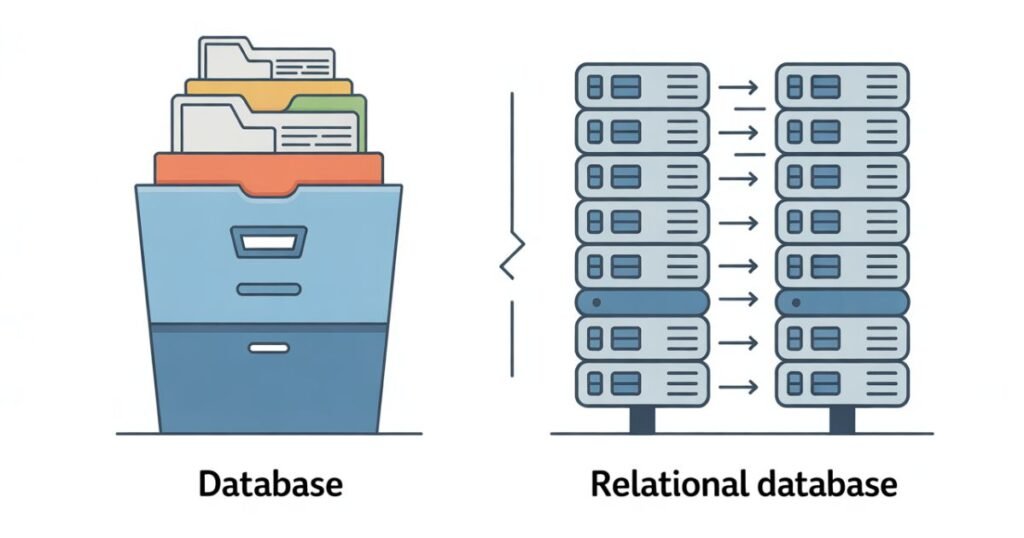
A database is a system that stores data in a way that makes it easy to find, change, and manage. It doesn’t say exactly how the data should look. Instead, it focuses on making sure that information is stored and retrieved quickly.
Databases can hold both structured data, like names and numbers, and unstructured data, like pictures, videos, and text files. Some databases are made to be flexible, others to be fast, and still others to handle huge amounts of data across many servers. This broad definition covers a lot of different types of databases, such as NoSQL and relational databases.
What a relational database is
A relational database is a kind of database that keeps information in tables. Like spreadsheets, these tables have rows and columns. Each column is a field or attribute, and each row is a record.
Relationships are the main idea behind relational databases. Keys connect tables so that data in one table can be linked to data in another. For instance, a customer ID can connect a customer table to an orders table. This design cuts down on duplication and keeps data consistent and organized.
The main difference between a database and a relational database is…
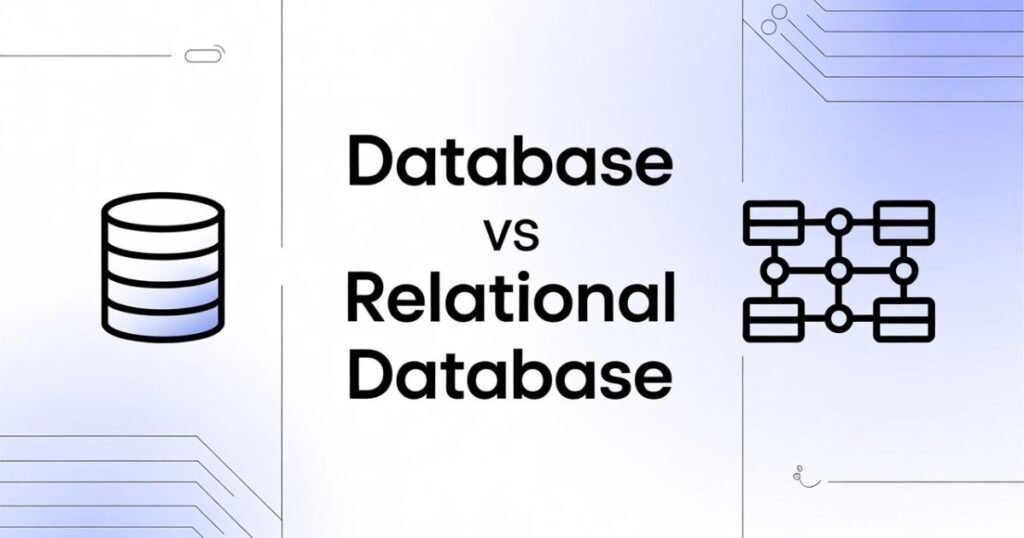
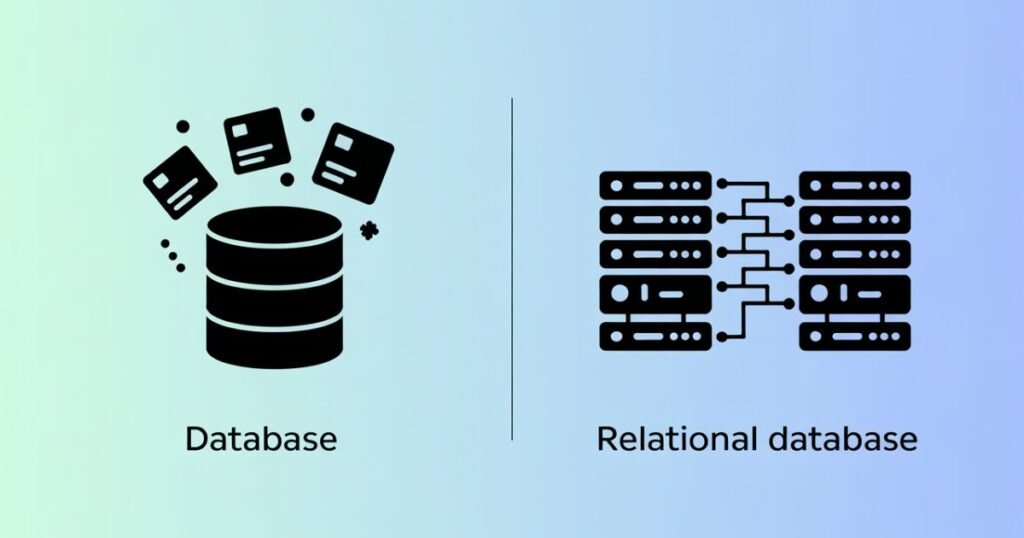
The main difference between a database and a relational database is how they are set up and what rules they follow. A general database may let you store data in more formats and with fewer rules. A relational database has a set structure and strict rules about how data should be stored and linked.
Relational databases need schemas that are already set up, which means you have to decide how the data will be stored before you do it. In general databases, especially those that aren’t relational, the structure can change over time. This makes relational databases easier to understand, while other types of databases are more flexible.
How to handle relationships between data
The database engine takes care of relationships in relational databases. Primary and foreign keys make sure that data stays connected and correct. If one record changes, the database can automatically keep related tables in sync.
In other types of databases, the application itself usually takes care of relationships. This gives developers more freedom, but it also makes them more responsible. If not handled carefully, logical errors can cause data to be duplicated or inconsistent.
What is the difference between relational and NoSQL?
When you look at how data is structured and how easy it is to add more data, you can see the difference between relational and NoSQL databases. Relational databases use tables and fixed schemas to store data. NoSQL databases, on the other hand, store data in formats like documents, key-value pairs, or graphs.
NoSQL databases are made to deal with a lot of data that changes often. They are often used in systems that have a lot of content, social networks, and real-time applications. Relational databases are better for systems that need to be accurate, consistent, and have clear relationships.
The difference in performance between NoSQL and relational databases
When looking at the differences in performance between NoSQL and relational databases, the use case is the most important thing to think about. When dealing with huge datasets spread out over many servers, NoSQL databases often work better. They are made to scale horizontally, which makes it easy for systems to grow.
Transactional reliability is usually the main focus of relational databases. They make sure that every operation is done right, even when a lot of people are using the data at once. They can grow, but it usually takes a lot of planning and optimization.
Data that is consistent and reliable
Relational databases are known for being very consistent. They follow strict rules that make sure the data is always correct and trustworthy. Transactions are set up so that they can’t lose data or make partial updates.
To make things faster and more available, many NoSQL databases don’t follow these rules as strictly. This means that the data may not be correct right away on all systems, but it will be correct in the end. This trade-off is usually fine for things like analytics or social feeds.
Flexibility and design of the schema
NoSQL and other general databases let you design your schema in a flexible way. Without too much trouble, developers can add new fields or change the way data is stored. This is useful for projects that move quickly and have changing needs.
It is important to plan schema changes carefully when using relational databases. Changing tables can take a long time, especially when there are a lot of records. But this structure makes data models cleaner and cuts down on problems that last a long time.
What each approach is usually used for
Relational databases are used a lot in banking systems, business software, inventory management, and customer relationship management systems. Relational design is good for any system that needs accurate transactions and clear data relationships.
People often use non-relational databases for big data processing, content management systems, real-time apps, and cloud-based platforms. They are great for modern, data-heavy apps because they can handle unstructured data.
Picking the right answer
It depends on the needs of the business whether to use a database or a relational database. A relational database is usually the best choice if you need to make sure that data is correct, report on it, and keep track of relationships. A non-relational database might be better if speed, flexibility, and scalability are the most important things.
A lot of modern systems use both methods at the same time. Relational databases store important transactional data, while NoSQL databases store big or unstructured data.
Last point of view
When you learn the difference between a database and a relational database, you don’t have to choose which one is better overall. It’s about knowing what they’re good at and what they’re not good at. Relational databases are structured, consistent, and dependable. Some databases are flexible and can grow with your needs.
Companies and developers can make solutions that meet real-world needs and support long-term growth by knowing the difference between relational and NoSQL databases and between NoSQL and relational database systems.