
One of the most important things to do when building a website is to pick the right technology. A lot of students and businesses compare AngularJS vs. NodeJS because they think they do the same thing. In reality, both are strong, but they are made for very different jobs. Knowing how they work and where they fit in helps you make web apps that are better and work better.
The Main Idea Behind AngularJS and NodeJS
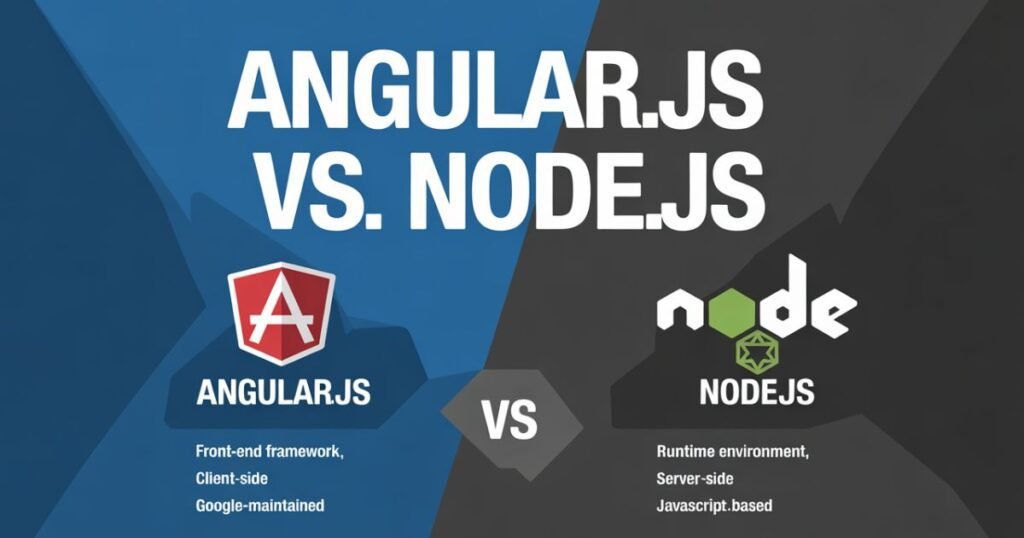
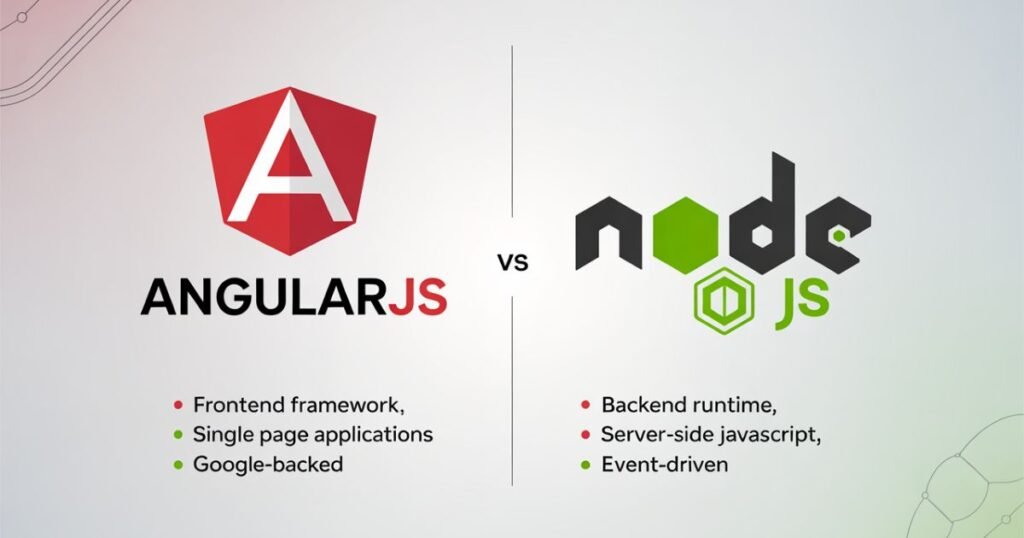
AngularJS is a frontend framework that makes it possible to create dynamic and interactive user interfaces. It runs in the browser and looks at how people see and use a website. It helps developers make single-page apps that change content without having to reload the page.
On the other hand, NodeJS is a runtime environment for the backend. It runs on the server and takes care of things like processing data, connecting to databases, and server logic. It lets developers use JavaScript on the server side, which speeds up and makes development more consistent.
This fundamental distinction serves as the basis for the AngularJS versus NodeJS comparison.
Role in making web apps
The presentation layer is mostly handled by AngularJS. It controls views, responds to user actions, and makes changes to the interface smoothly. Data binding and reusable components are two features that make coding easier and the user experience better.
NodeJS works in the background. It takes care of client requests, processes data, and sends responses back to the browser. It’s very helpful for apps that need real-time features like chat systems, notifications, or live updates.
So, when talking about AngularJS and NodeJS, it’s important to know that one is more about user interaction and the other is more about server operations.
Speed and Performance
AngularJS makes things run faster on the client side by reducing the number of times a page has to be reloaded and handling data better in the browser. It makes things easier for users, especially in single-page apps.
People know that NodeJS works very well on the server side. Because of its non-blocking architecture, it can handle many requests at once without slowing down. This makes it good for apps that need to work with a lot of traffic and in real time.
When comparing AngularJS and NodeJS, both work well, but in different settings.
The learning curve and the experience of developing
AngularJS has a structured way of doing things that is useful for big apps. But beginners might find it a little hard at first because of things like directives, dependency injection, and modules.
NodeJS is often easier to learn, especially for developers who already know JavaScript. Using the same language for server-side code as for the frontend saves time and makes things less confusing.
When it comes to learning, NodeJS is usually thought to be easier for beginners than AngularJS. However, AngularJS is better for big, complicated projects because it has a strong structure.
Flexibility and scalability
AngularJS helps you organize your frontend code so that it’s easier to keep up with as the app grows. Its component-based design makes it easier to scale up on the user interface side.
NodeJS can handle a lot of traffic on the server side. A lot of people use it to make apps that need to grow quickly, like streaming services, online services, and APIs. A lot of people like it because it can handle many connections at once.
This means that the AngularJS vs NodeJS debate is more about how they help each other grow than how they fight each other.
Use Cases and Real-World Uses
AngularJS is best for apps that need interactive forms, dashboards, and rich user interfaces. It is often used to build frontends for businesses.
NodeJS is great for backend services, REST APIs, applications that need to work in real time, and systems that need a lot of data. It helps speed up development and works well with new databases.
In real life, people often use AngularJS and NodeJS together instead of separately. This brings up an important point in the comparison of AngularJS and NodeJS.
Ecosystem and Community Support
There are a lot of people who use both AngularJS and NodeJS. AngularJS has a lot of built-in tools and features for building the front end. There are a lot of packages in the NodeJS ecosystem that make backend development easier.
Both technologies are good choices for long-term projects because they have libraries, frameworks, and tools that are easy to find.
Last Thoughts
It’s not about picking one over the other when you compare AngularJS and NodeJS. Instead, it’s about knowing what their jobs are in web development. AngularJS is all about making interfaces that are easy to use and interactive, while NodeJS handles server-side logic and performance.
Both technologies can work together well to make a full and powerful web app. Developers and businesses can make applications that are faster, can handle more users, and are more reliable if they know how and when to use each one.