
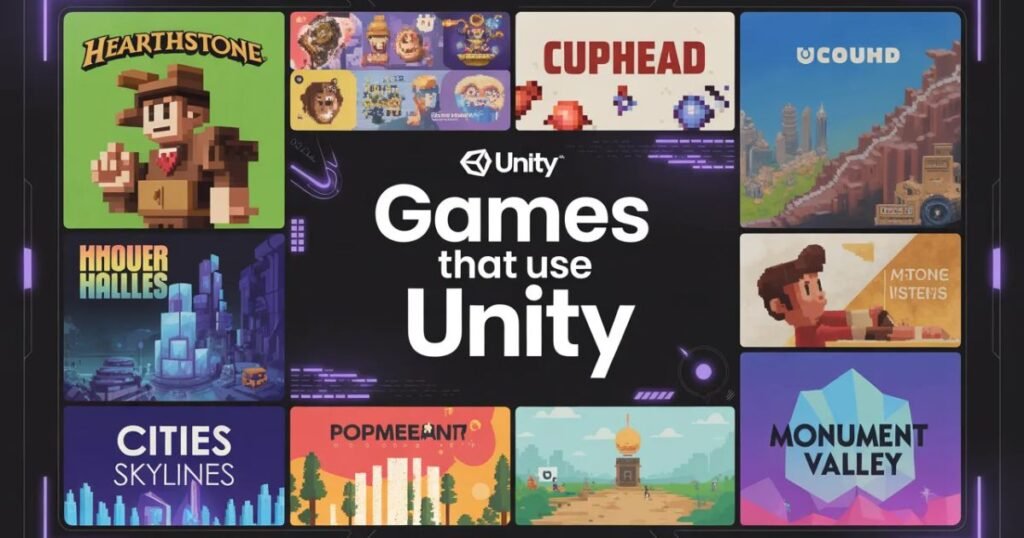
Unity has become one of the most widely used game engines in the global gaming industry. From simple mobile games to complex multiplayer titles, Unity powers thousands of successful projects across multiple platforms. Its popularity comes from its flexibility, ease of use, and ability to support developers at every level. Many well known games that millions of people play every day are built using Unity, which makes it an important technology for anyone interested in game development. Understanding which Games That Use Unity helps learners see how the engine performs in real world production environments and why it is trusted by professionals.
What Makes Unity a Popular Game Engine
Unity is preferred by developers because it simplifies the game development process without compromising performance. It supports cross platform development, allowing a single game to run on mobile devices, PCs, consoles, and even web platforms. Unity uses the C# programming language, which is easier to learn compared to many other development languages. The engine also provides built in tools for animation, physics, lighting, and sound, reducing the need for external software. Its large developer community and frequent updates ensure that users always have access to learning resources and technical support.
Mobile Games Built Using Unity
Unity dominates the mobile gaming market due to its optimization capabilities and smooth performance across different devices. One of the most famous Unity based mobile games is Subway Surfers, which continues to attract millions of players worldwide. Pokémon GO, another Unity powered game, introduced augmented reality gaming to the mainstream audience and became a cultural phenomenon. Call of Duty Mobile uses Unity to deliver high quality graphics, multiplayer gameplay, and real time combat on smartphones. These games show how Unity handles fast paced action, location based gameplay, and large scale player interaction efficiently.
PC Games Developed with Unity
Unity is also widely used for PC game development, especially among indie studios and midsized developers. Hollow Knight is a popular example that demonstrates Unity’s ability to support detailed environments and immersive storytelling. Cuphead, known for its hand drawn art style, uses Unity to combine classic animation with modern gameplay mechanics. Kerbal Space Program relies on Unity’s physics engine to simulate realistic space exploration. These games highlight how Unity can support complex mechanics, unique visuals, and performance intensive systems on desktop platforms.
Console Games That Use Unity
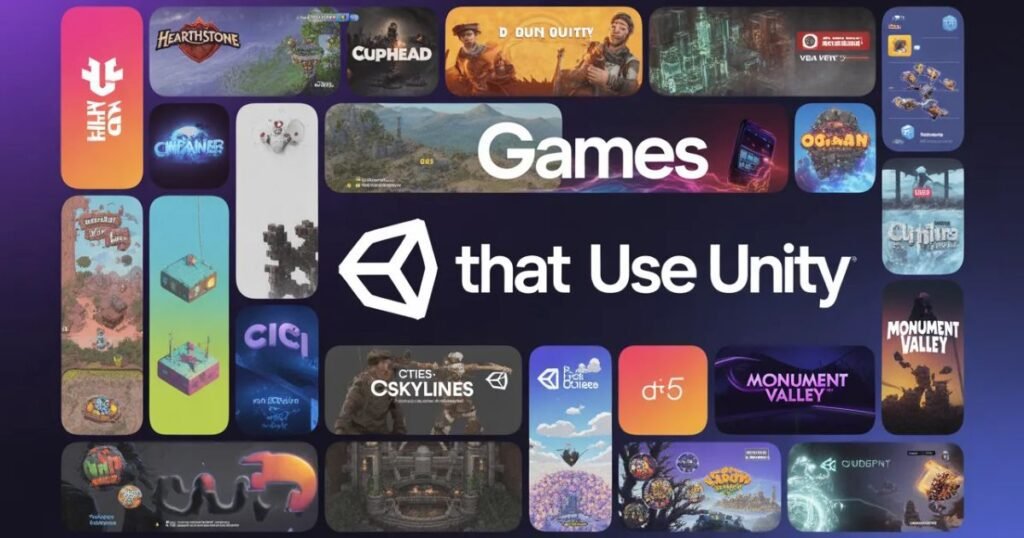
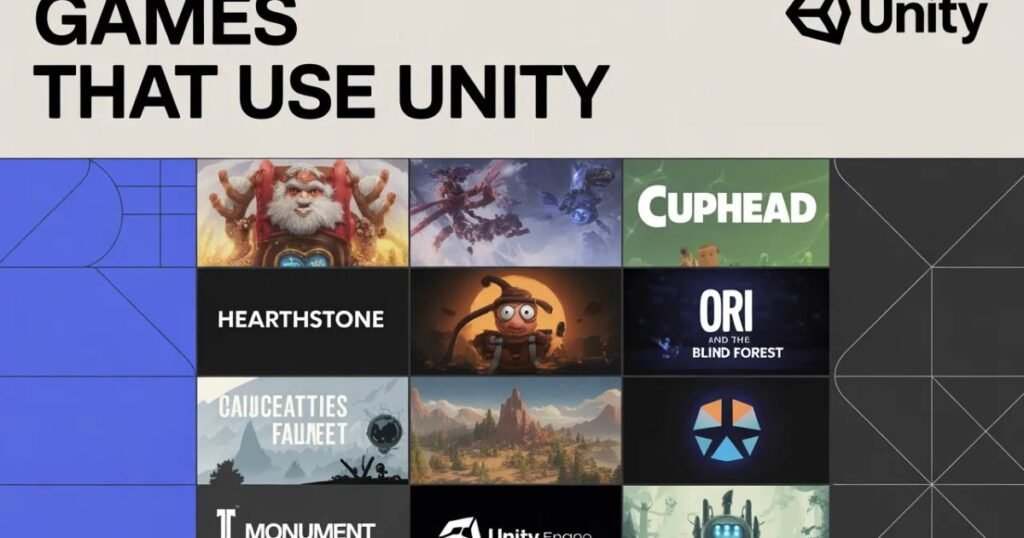
Many successful console games are built using Unity, proving that the engine is not limited to small or casual projects. Fall Guys, a multiplayer party game, became globally popular and runs smoothly on PlayStation, Xbox, and PC using Unity. Ori and the Blind Forest and Ori and the Will of the Wisps showcase Unity’s ability to handle emotional storytelling, smooth animations, and visually rich environments. These games demonstrate that Unity can meet the high performance and quality standards required for console gaming.
Indie Game Success Stories Powered by Unity
Unity has played a major role in empowering independent game developers. One of the most notable examples is Among Us, which was developed by a small team but achieved massive global success. Unity allowed the developers to focus on gameplay innovation rather than engine complexity. Inside, a critically acclaimed puzzle platformer, also uses Unity to create atmospheric visuals and smooth interactions. These success stories show that Unity provides indie developers with professional grade tools without requiring large budgets or teams.
Unity in Multiplayer and Online Games
Multiplayer functionality is another area where Unity performs exceptionally well. Games like Rusted Warfare and Escape from Tarkov Arena use Unity’s networking capabilities to manage online interactions. Unity supports real time synchronization, matchmaking systems, and server integration, making it suitable for online games of various scales. Developers can integrate third party networking solutions or use Unity’s built in services. This flexibility allows studios to create stable and engaging multiplayer experiences across platforms.
Use of Unity in AR and VR Games
Unity is a leading engine for augmented reality and virtual reality development. Games and applications designed for VR headsets often rely on Unity due to its real-time rendering and performance optimization. Pokémon GO is a strong example of augmented reality usage, while many VR games and simulations use Unity to deliver immersive experiences. Unity also supports hardware such as Oculus, HTC Vive, and PlayStation VR. This makes Unity an important tool not only in gaming but also in training simulations and interactive learning environments.
Unity Beyond Entertainment Games
Unity is not limited to entertainment focused gaming. It is also used to create serious games, educational tools, and simulations. Many training programs use Unity based simulations to teach skills in healthcare, aviation, and engineering. Game based learning platforms often choose Unity due to its interactive capabilities. This wide application increases the value of Unity skills in the job market, as professionals can work in industries beyond traditional game development.
Skills Developers Learn by Working with Unity Games
Developers working with Unity gain a wide range of technical and creative skills. These include game physics implementation, animation systems, artificial intelligence behavior, and user interface design. Unity also teaches optimization techniques, debugging methods, and version control practices. Working on real Unity projects improves problem solving skills and logical thinking. These abilities are highly transferable and useful in software development, simulation design, and interactive media careers.
Career Opportunities for Unity Developers
The demand for Unity developers continues to grow as more companies adopt interactive technologies. Career roles include game developer, AR and VR developer, simulation engineer, and mobile application developer. Many training and placement programs focus on Unity because it aligns with industry requirements. Candidates with Unity experience often stand out during interviews due to their practical project exposure. Unity knowledge also helps freelancers and independent developers build their own games or applications.
Why Learning Unity Is a Smart Career Choice
Learning Unity offers long term benefits for students and professionals. Since many popular games use Unity, developers can relate their skills directly to real industry examples. Unity’s continuous updates ensure that developers stay aligned with modern technology trends. Its widespread usage across gaming, education, and enterprise solutions makes it a versatile skill. For beginners, Unity provides an accessible entry point, while for experienced developers, it offers advanced customization options.
Final Conclusion
Unity has proven itself as a powerful and reliable game engine used in some of the most popular games across mobile, PC, console, and immersive platforms. From indie successes to large-scale multiplayer titles, Unity supports a wide range of gaming experiences. Learning Unity from Checkmate allows developers to work with the same tools used by professionals in the industry. For students enrolled in training and placement programs, Unity offers practical knowledge that directly aligns with job market needs. Whether the goal is to build games or explore interactive technologies, Unity provides a strong foundation for a successful career.