
Symmetric encryption remains one of the most essential pillars of modern application security. Whether you are building a backend system, securing API communications, or protecting sensitive user data, choosing the right encryption algorithm is critical. For developers working with Node.js, this decision matters even more, as Node.js is widely used for web applications, cloud services, enterprise platforms, and real-time systems.
For learners preparing for careers in the USA, Canada, and the UK, understanding symmetric encryption is not just a technical skill but a requirement for many development, DevOps, cybersecurity, and cloud-related roles. Checkmate ITTech offers industry-focused training and placement support, and this article is designed to help you understand one of the most important concepts you will encounter in modern software engineering: symmetric encryption in Node.js.
This article covers the best symmetric encryption algorithms used in Node.js, their advantages, when to use them, and what you should focus on as a learner or trainee.
Understanding Symmetric Encryption
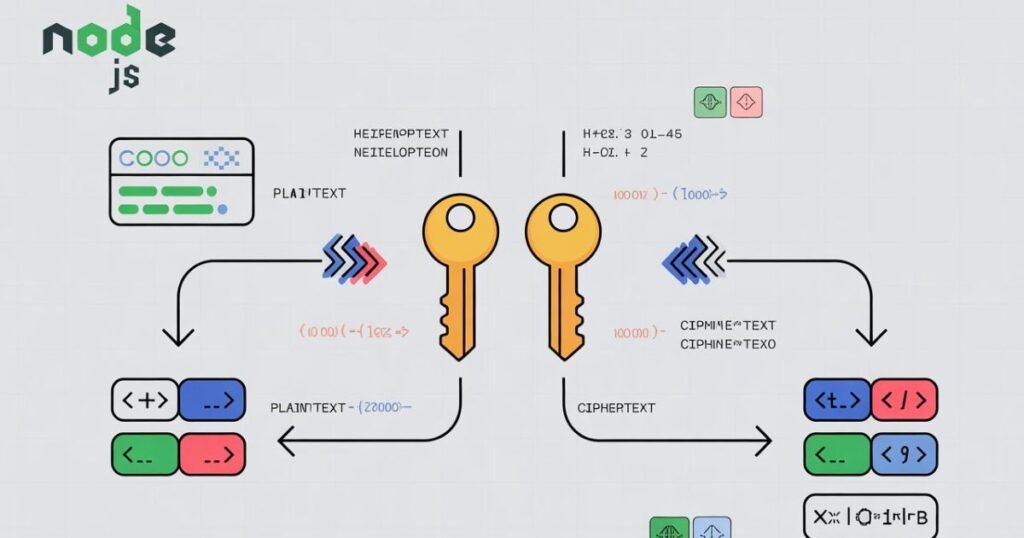
Symmetric encryption uses the same key for both encrypting and decrypting data. This makes it fast, efficient, and ideal for large volumes of data or real-time processing. Unlike asymmetric encryption, which uses public and private keys, symmetric encryption is typically used for internal systems, APIs, databases, file storage, and secure communication channels within the backend.
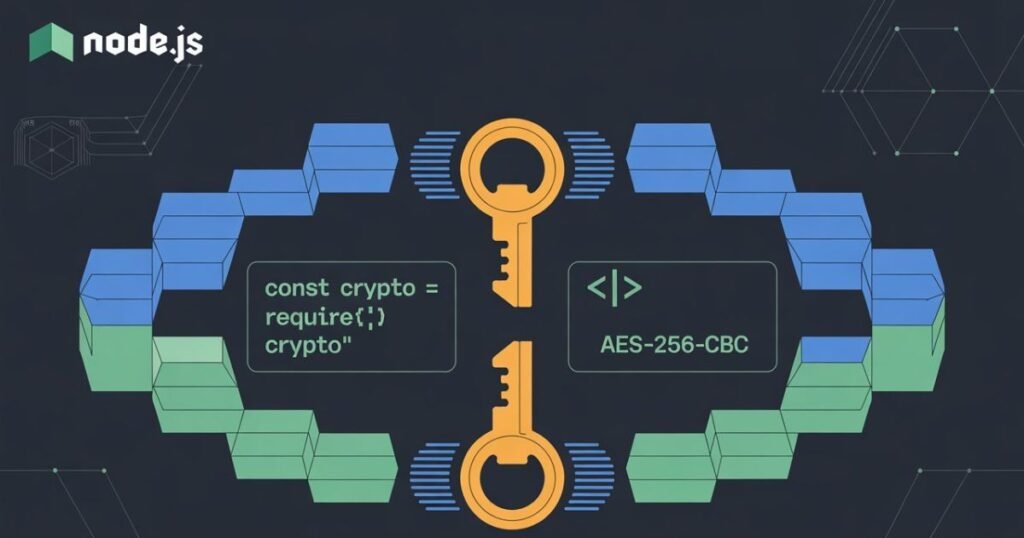
In the Node.js ecosystem, symmetric encryption is commonly implemented through the built-in crypto module, which supports several advanced algorithms. Even though the implementation is straightforward, choosing the right algorithm requires an understanding of security strength, speed, compatibility, and industry standards.
Why Symmetric Encryption Matters in Node.js Applications
Node.js powers millions of modern applications across industries. Because of its event-driven, non-blocking architecture, Node.js is widely used for:
Enterprise-level web applications
Financial and payment platforms
Healthcare systems
E-commerce applications
SaaS platforms
Cloud-native microservices
All of these systems handle sensitive data such as personal details, credit card information, financial records, medical records, login credentials, and internal communications. With increasing data protection laws in the USA, Canada, and the UK, encryption is not optional; it is a mandatory element of compliance and security.
Learning the right encryption algorithm can help developers build applications that are not only functional but secure and industry-ready. This is why Checkmate ITTech ensures that encryption, cybersecurity awareness, and secure coding practices are part of our training programs.
The Most Widely Used Symmetric Encryption Algorithms in Node.js
While there are several symmetric encryption algorithms, not all of them are recommended for modern systems. The best algorithm is one that offers a balance of security, speed, and compatibility with the latest industry standards.
Below are the top symmetric encryption algorithms for Node.js.
AES (Advanced Encryption Standard): The Industry Standard
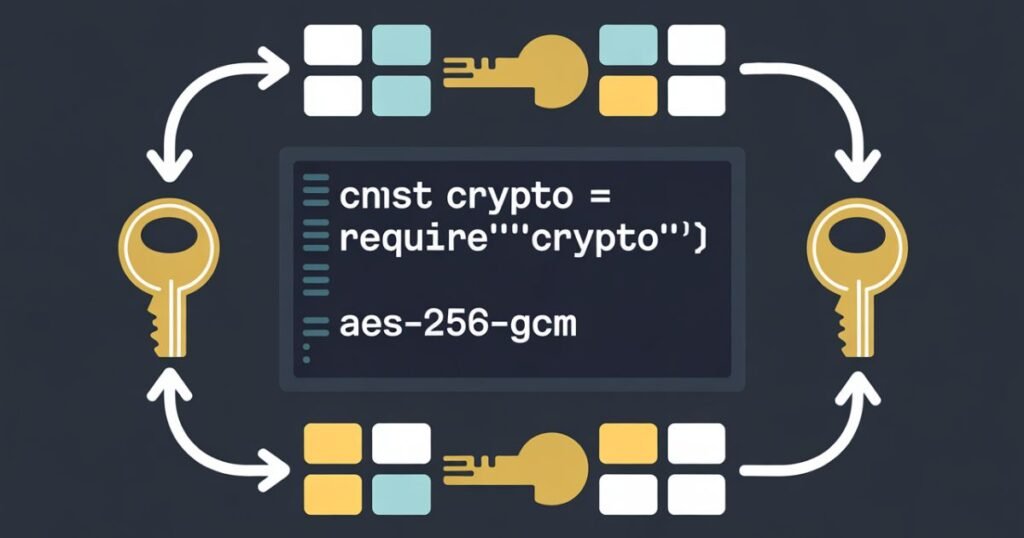
AES is the most recommended and widely used symmetric encryption algorithm in modern development. It is approved by government agencies, financial institutions, and global security frameworks. Node.js supports AES through multiple variations, such as AES-128, AES-192, and AES-256.
AES-256 is considered the strongest and most secure version, making it ideal for applications that handle sensitive or confidential data.
Why AES is the Best Choice for Node.js
High security due to strong key length
Extremely fast and efficient
Supported by Node.js natively
Recognized by compliance standards across USA, Canada, and UK
Ideal for enterprise and production-level systems
AES is used in APIs, databases, cloud storage encryption, token generation, file protection, and secure communication systems. Because of its reliability, it is the recommended algorithm for most Node.js applications.
DES and 3DES: Older but Still Relevant in Legacy Systems
DES (Data Encryption Standard) and its improved version, 3DES (Triple DES), were widely used in older systems. Although considered outdated today, some enterprise and banking applications still rely on them for compatibility purposes.
Why DES/3DES Are No Longer Recommended
Shorter key lengths
Slower performance
Weaker security compared to AES
These algorithms are mainly relevant for understanding legacy systems and migrating old platforms to modern security standards. For fresh learners and trainees, knowing about DES and 3DES is helpful, but AES should be your main focus.
ChaCha20: A Modern Alternative to AES
ChaCha20 is a newer symmetric encryption algorithm known for its speed and stability, especially on less powerful devices. It is widely used in VPNs, mobile apps, and security-focused environments.
Why Developers Consider ChaCha20
Fast performance on mobile and low-end hardware
High resistance to timing attacks
Ideal for secure communication and networking applications
While AES remains the most common choice in Node.js development, ChaCha20 is gaining popularity in advanced use cases. Learning it can give you an edge in security-focused job roles.
Blowfish and Twofish: Secure but Less Common Today
Blowfish and Twofish were strong algorithms before AES became the industry standard. They still offer decent security, but they are not widely implemented in modern systems.
Key Characteristics
Fast and lightweight
Flexible key sizes
Good for embedded systems or small applications
Although not the top recommendation anymore, developers might still encounter these algorithms in older applications. Understanding their characteristics helps you work with different system architectures during your career.
How to Choose the Best Symmetric Encryption Algorithm for Node.js
Choosing the right algorithm depends on the type of application you are building. Below are the most important considerations for developers and trainees:
Security Requirements
For financial, healthcare, or enterprise systems, AES-256 is the preferred option. It meets global compliance standards required in the USA, Canada, and UK.
Performance Needs
If you are working with mobile or low-power devices, ChaCha20 might be a better option due to its performance benefits.
Compatibility
If maintaining older systems, you may need DES or 3DES for backward compatibility, but only temporarily.
Compliance and Regulations
Regions like the USA, Canada, and UK have strict cybersecurity standards. AES is widely accepted across all compliance frameworks, making it the safest choice.
Long-Term Support
AES is future-proof, widely documented, and supported by every major cloud provider and security library.
For modern Node.js applications, AES-256 remains the strongest recommendation.
The Role of Symmetric Encryption in Modern Job Markets
In countries like the USA, Canada, and the UK, roles such as full-stack developer, backend developer, cybersecurity analyst, and cloud engineer require strong knowledge of encryption and secure coding practices. Companies prioritize candidates who understand data protection, compliance requirements, and security implementation.
Training in encryption technologies makes learners more competitive in:
Software development roles
Cybersecurity positions
API and backend engineering
Cloud and DevOps careers
Data protection and compliance-related jobs
This is why Checkmate ITTech includes security and encryption concepts in training programs. Employers expect modern developers to build not only functional applications but secure systems that meet global standards.
Why Checkmate ITTech Focuses on Encryption in Training
Checkmate ITTech provides structured, practical training programs with placement support in the USA, Canada, and the UK. Encryption is a core part of backend and full-stack development training because companies demand developers who understand industry-level security standards.
Students trained in symmetric encryption gain:
Better job opportunities
Increased confidence while building real projects
Knowledge required for enterprise-level systems
Security awareness that helps avoid common vulnerabilities
By learning algorithms like AES, understanding how encryption works, and practicing implementation, trainees become industry-ready and capable of handling real-world cybersecurity challenges.
Conclusion
Choosing the best symmetric encryption algorithm for Node.js is an essential part of building secure, scalable, and modern applications. While multiple algorithms exist, AES continues to be the most trusted and widely used option in the industry. Understanding why AES stands out, how symmetric encryption works, and what alternatives exist helps developers make informed security decisions.
For learners preparing for global tech markets, mastering these concepts is a significant advantage. Checkmate ITTech ensures that trainees not only understand these algorithms but also know how to apply them in real-world development environments, making them job-ready for opportunities in the USA, Canada, and the UK.
If you are planning to build a career in software development or cybersecurity, learning symmetric encryption is an important step toward becoming a strong, reliable, and industry-ready professional.