If you're trying to decide between Java Full Stack and Python Full Stack, you're asking a genuinely good question and it's one of the most common ones we hear at Checkmate IT Tech (checkmateittech.com) from people planning their first move into development.
Both paths lead to solid, well-paying careers. Both are in demand. But they're not identical, and picking the one that actually fits your goals (and your personality, honestly) makes a real difference in how quickly you get job-ready.

This article breaks down the real differences salary, demand, skills, learning curve in plain language, without the hype you'll find on most comparison pages.
First, What Does "Full Stack" Actually Mean?
Before comparing the two, let's clear this up, because a lot of beginners are fuzzy on it.
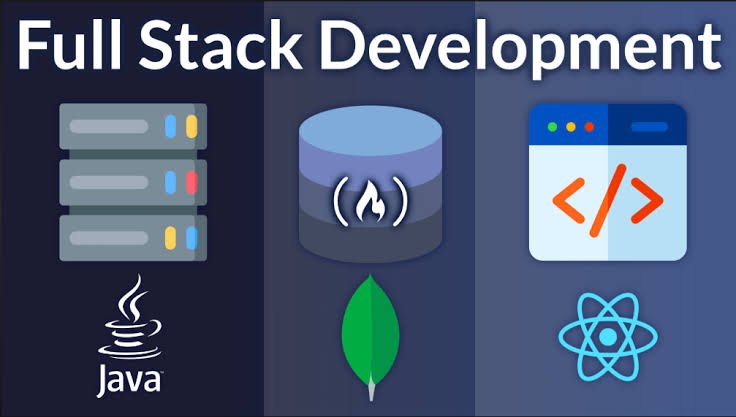
A full stack developer works on both sides of an application:
- Front end what the user sees and clicks (the interface, buttons, layouts, forms)
- Back end what happens behind the scenes (the logic, the database, the server, the security)
The "Java" or "Python" part refers mainly to the back-end language you'll specialize in. The front-end technologies HTML, CSS, JavaScript, and a framework like React or Angular are largely the same in both paths.
So the real question isn't "which entire career is better?" It's: which back-end ecosystem do you want to build your career on?
Java Full Stack: The Enterprise Path

What it looks like
Java Full Stack usually means:
- Back end: Core Java, Spring, Spring Boot, Hibernate, REST APIs, microservices
- Front end: HTML, CSS, JavaScript, Angular or React
- Database: MySQL, Oracle, PostgreSQL
- Tools: Maven, Git, Docker, Jenkins, AWS or Azure
Where Java is strongest
Java dominates large enterprise systems banking, insurance, healthcare, telecom, government, and large corporations. These are organizations that run massive, long-lived systems where stability, security, and scale matter more than moving fast.
That matters for your career in a practical way: those industries hire in volume, hire consistently, and rarely rewrite their systems from scratch. Java jobs are less trendy, but they are extremely steady.
Who Java suits
Java suits people who:
- Want to work in banking, finance, insurance, or large corporate environments
- Like structure, clear rules, and well-defined architecture
- Are willing to invest a bit more time upfront in learning fundamentals properly
Java is stricter than Python. It makes you declare things explicitly, follow structure, and write more code to do the same thing. That's frustrating at first but it also teaches you programming fundamentals very thoroughly, which is a genuine long-term advantage.
Python Full Stack: The Flexible, Modern Path
What it looks like
Python Full Stack usually means:
- Back end: Python, Django or Flask, REST APIs
- Front end: HTML, CSS, JavaScript, React or Angular
- Database: PostgreSQL, MySQL, MongoDB
- Tools: Git, Docker, AWS, and often data-related libraries
Where Python is strongest
Python is everywhere in startups, product companies, automation, data science, and AI. It's the language of choice for companies building quickly, and it's also the dominant language in machine learning and data work.
That last point is a big deal for career flexibility. A Python Full Stack developer can pivot into data engineering, AI/ML, or automation far more easily than a Java developer can because Python is the shared language across all of those fields.
Who Python suits

Python suits people who:
- Want to enter the field faster with a gentler learning curve
- Are interested in AI, data science, or automation as a future direction
- Prefer startups and product companies over large corporate environments
- Want to see working results quickly while learning
Python's syntax is famously readable it looks closer to plain English than most languages. For complete beginners, this genuinely reduces early frustration and keeps motivation up.
Salary Comparison: What the Data Actually Says
Here's where a lot of comparison articles oversell one side. The honest answer: the gap between them is smaller than most people expect, and other factors matter more.
What current salary data shows for full stack developers in the US:
- Full stack developer salaries overall average roughly $118,000 per year, with the Bureau of Labor Statistics placing software developers at a median of about $133,080 and web developers at about $90,930 full stack roles land somewhere between these depending on how technical the back-end work is.
- Entry-level full stack roles in the US commonly start around $85,000 to $107,000, moving substantially higher at the mid-level with 2–4 years of experience.
- Python full stack roles specifically show a typical range from around $109,000 to $175,000 depending on seniority and location, according to Glassdoor data.
The key takeaway: your salary is driven far more by your depth of back-end skill, your experience level, your location, and whether you have cloud and framework expertise than by whether you chose Java or Python. A strong Java developer and a strong Python developer with the same experience earn roughly similar money.
Where you'll see real salary differences:
- Java tends to pay slightly more in enterprise environments banking, insurance, large corporates
- Python tends to pay more once you combine it with AI/ML or data engineering skills
Demand Comparison
Both are in demand. But the shape of that demand is different:
Java demand is deep and stable. Enterprise systems built in Java need constant maintenance, upgrades, and new features. These jobs aren't going anywhere companies have invested decades into these systems. Expect consistent, high-volume hiring, especially through IT consulting and staffing firms.
Python demand is broad and growing fast. Python appears across web development, data science, AI, automation, and scripting. Full stack job postings commonly list JavaScript, React, and Python among the most frequently required skills in 2026, which tells you Python is well-established on the web side too, not just in data.
Overall, software developer employment is projected to grow around 15% through 2034 well above average so demand for both paths is strong.
Skill Comparison: Side by Side
| Factor | Java Full Stack | Python Full Stack |
| Learning curve | Steeper, more structured | Gentler, beginner-friendly |
| Back-end frameworks | Spring, Spring Boot, Hibernate | Django, Flask |
| Typical industries | Banking, insurance, enterprise, telecom | Startups, product companies, AI/data |
| Code style | Verbose, explicit, strict | Concise, readable, flexible |
| Career flexibility | Strong in enterprise backend | Strong across web, data, AI |
| Time to first job (typical) | Slightly longer | Slightly shorter |
So Which Should You Choose?
Here's our honest recommendation, based on what we've seen work for actual students:
Choose Java Full Stack if: you want enterprise stability, you're targeting banking or large corporations, and you don't mind investing extra time upfront to build strong fundamentals.
Choose Python Full Stack if: you're newer to programming, you want to reach job-readiness faster, or you're interested in eventually moving toward AI, data science, or automation.
Neither choice locks you in forever. Developers switch stacks all the time. Your first language teaches you how to think like a programmer and that thinking transfers.
Why Self-Study Alone Leaves Most Beginners Stuck
This is the part we want to be straightforward about, because it's where most people lose months of time.
Self-study isn't useless plenty of people have taught themselves to code. But here's what consistently goes wrong when beginners try to learn full stack development entirely on their own:
1. You don't know what to learn, or in what order. Full stack covers front end, back end, databases, APIs, version control, and deployment. Free tutorials teach each of these in isolation, using different versions, different conventions, and different project setups. Beginners end up with scattered knowledge instead of a working skill set.
2. You get stuck with no one to ask. Every developer hits bugs they can't solve alone. With a mentor, that's a 10-minute fix. Alone, it's often a two-day dead end and it's exactly where most self-learners quit.
3. You don't build employer-ready projects. Tutorial projects look like tutorial projects. Hiring managers recognize them instantly. What actually gets you interviews is a real, end-to-end project you can explain and defend which requires guidance to build properly.
4. Nobody prepares you for the interview. Knowing how to code and knowing how to pass a technical interview are different skills. Mock interviews, resume positioning, and knowing what questions actually come up are things you simply cannot get from a YouTube playlist.
5. There's no accountability. Most self-study plans quietly die around week six. Not because the person wasn't capable because life got busy and nobody was expecting them at class.
How Checkmate IT Tech Helps You Actually Finish
At Checkmate IT Tech, we built our training and placement programs specifically around these gaps. We're not a video library you watch alone we're a structured program with real instructors, real projects, and real placement support behind it.
What that means for you practically:
- A structured, ordered curriculum so you're never guessing what to learn next
- Live, mentor-led instruction with people you can actually ask questions
- Real, portfolio-ready projects you can walk an interviewer through with confidence
- Interview and resume preparation, because getting the skill is only half of getting the job
- Placement support to help you convert that training into an actual offer
If you're leaning toward Python, our Python Programming Training builds the exact foundation a Python Full Stack career stands on and it pairs naturally with our Data Science training if you later want to move toward data or AI work.
If you're aiming toward AI or automation-heavy roles down the line, our Artificial Intelligence program shows how Python skills extend into one of the fastest-growing areas in tech right now.
Not sure which track fits you yet? Browse our full course catalog to compare paths side by side, or read more about who we are and how our training and placement model works on our About Us page.
We'd rather you pick the right track and succeed than pick fast and quit. That's why we start with a conversation about your background and goals, not a sales pitch.
Final Thoughts
Java Full Stack and Python Full Stack are both genuinely strong career paths in 2026 the salaries are comparable, the demand is real, and neither is going away. Java gives you enterprise stability and thorough fundamentals. Python gives you a gentler entry and a clear bridge into AI and data work later. The better question isn't "which is better?" but "which fits where I want to end up?"
What we can tell you from experience is this: the people who succeed aren't necessarily the ones who picked the "perfect" language. They're the ones who picked a path, learned it properly with guidance, built something real, and prepared for interviews seriously. That's exactly what structured training is for and it's exactly what Checkmate IT Tech (checkmateittech.com) is built to give you.
If you're ready to stop researching and start building, reach out. We'll help you pick the right track and walk you through it from your first line of code to your first offer.
Frequently Asked Questions
1. Which pays more, Java Full Stack or Python Full Stack?
The salaries are broadly comparable. Java often pays slightly more in enterprise environments like banking, while Python can pay more when combined with AI or data engineering skills. Your experience level, location, and depth of back-end skill matter far more than the language itself.
2. Which is easier to learn for a complete beginner?
Python is generally easier to start with because of its simpler, more readable syntax. Java is stricter and more verbose, which makes the early stage harder but builds very strong fundamentals.
3. Which has more job openings?
Both have strong demand. Java has deeper, more stable demand in enterprise and corporate environments, while Python has broader demand across web development, startups, automation, and AI/data roles.
4. Can I switch from one to the other later?
Yes. Core programming concepts transfer between languages. Many developers switch stacks during their careers, and the second language is always significantly easier than the first.
5. How long does it take to become job-ready as a full stack developer?
With structured, guided training, many people become job-ready in several months. Self-study timelines vary widely and often stretch much longer due to gaps in structure and guidance.
6. Do I need a computer science degree for full stack development?
No. Many full stack developers enter the field through training programs and demonstrable projects rather than a formal CS degree. What employers care about is whether you can build and explain working applications.
7. What front-end skills do I need for either path?
Both require HTML, CSS, JavaScript, and a modern framework usually React or Angular. The front end is largely the same regardless of which back-end language you choose.
8. Is Python Full Stack better if I want to work in AI later?
Yes. Python is the dominant language in AI and machine learning, so a Python background makes that transition significantly smoother than starting from Java.
9. Why should I take a training program instead of learning for free online?
Free resources teach individual topics well but rarely give you structure, mentorship, portfolio-quality projects, interview preparation, or accountability which are the main reasons most self-learners stall before reaching job-readiness.
10. Does Checkmate IT Tech offer placement support?
Yes. Our programs include interview preparation, resume guidance, and placement assistance, because we treat getting hired not just finishing the course as the real goal.