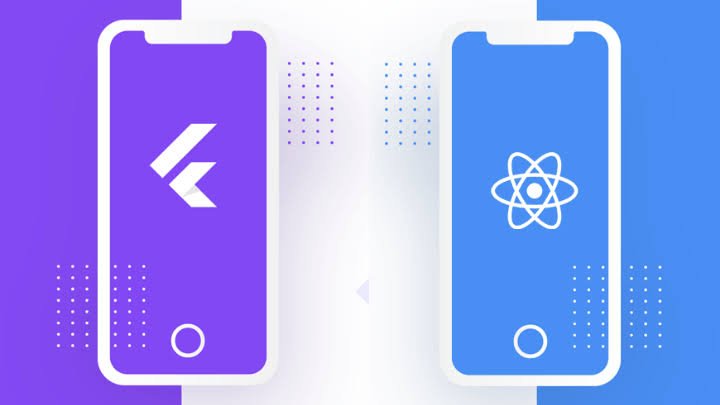
If you're trying to break into mobile app development, you've probably already run into this exact question: should you learn React Native or Flutter? Both frameworks show up constantly in job listings, both promise "build once, deploy everywhere," and both have loud, loyal communities online telling you their framework is the right choice. It's confusing, and honestly, most of what's written about this comparison is aimed at companies deciding what to build with not at someone trying to figure out what to actually learn to get hired.

This article looks at that question specifically: as a job seeker in 2026, which of these two skills gives you a better shot at landing a mobile developer role, and what should your learning path actually look like?
The Quick Answer
If your only goal is maximizing your number of job opportunities as fast as possible, React Native currently has the larger hiring market. But the full answer is more nuanced than "just learn React Native," and the right choice really depends on your background, your target companies, and how you plan to learn it. Let's break down why.
Why React Native Still Wins on Raw Hiring Volume
React Native is built on JavaScript and React and JavaScript remains the most widely used programming language in the world, with React being the dominant front-end framework for web development. That matters enormously for hiring, because it means the pool of people who can pick up React Native is massive: anyone who already knows React for web development is a short step away from being productive in React Native.
This shows up directly in job market data. Even though Flutter has grown to command a larger share of new cross-platform app builds Flutter sits at roughly 46% of new cross-platform projects versus React Native's 35% React Native still commands significantly more job postings in the US, by some estimates as much as 6 times more listings than Flutter. That gap exists because companies with existing web/React teams can staff a React Native project internally, while a Flutter project usually means hiring people specifically for Flutter.
So if you're optimizing purely for "how many job postings can I apply to," React Native is currently the safer, higher-volume bet.
Why Flutter Is Still Absolutely Worth Considering
Here's the part a lot of quick comparisons miss: Flutter's smaller talent pool isn't necessarily a downside for you as a job seeker it can actually work in your favor. Because fewer developers know Flutter, companies that specifically need it (and there are a growing number of them) often struggle to fill those roles, which means less competition for each opening and, in many cases, stronger pay for confirmed Flutter skills.

Flutter has genuine, structural advantages that keep demand growing: it draws every pixel of the UI itself instead of relying on native components, which gives you pixel-perfect consistency between iOS and Android. It's backed heavily by Google, and its use has expanded beyond mobile into web and desktop from a single codebase. Flutter is particularly strong with agencies, startups building cross-platform products from scratch, and companies targeting markets where Android fragmentation is a serious concern.
The honest takeaway: React Native gives you more total opportunities, but Flutter can give you less competition per opportunity and a genuinely growing niche, especially if you're willing to learn Dart (Flutter's programming language), which most developers find approachable even as a first language.
What Employers Are Actually Testing For
Here's something that surprises a lot of new developers: employers rarely just want someone who knows "the framework" in isolation. Job descriptions that say "React Native Developer" often turn out, once you're in the interview, to be testing for a much broader skill set API integration, offline data sync, native module debugging, and app release/deployment processes. Titles don't always reflect the actual day-to-day work.

That means whichever framework you choose, employers are generally hiring for:
- Core framework fluency genuinely comfortable building and debugging components, not just following tutorials
- API integration skills connecting your app to real backend services and handling data properly
- State management understanding how data flows through your app as it grows more complex
- Native module troubleshooting knowing what to do when the cross-platform abstraction breaks down and you need to dig into iOS or Android specifics
- App store deployment knowledge actually publishing and maintaining an app, not just running it locally
- Performance and UI polish since both frameworks have matured, employers increasingly expect apps that feel genuinely native, not "good enough for a demo"
This is exactly why simply watching tutorial videos and building a to-do list app rarely translates into a job offer. Employers are testing for the full picture, not just syntax familiarity.
Why Self-Learning Usually Falls Short Here
This is worth being honest about. It's absolutely possible to learn bits and pieces of React Native or Flutter from free resources official docs, YouTube channels, scattered blog posts. But here's the problem most self-taught learners run into: they end up with fragmented knowledge. You might know how to build a screen with a few components, but have no real exposure to API integration under real-world conditions, no experience debugging a native module issue, and no idea how app store submission actually works, because none of that comes up naturally in a beginner tutorial.
Employers can usually tell the difference within the first ten minutes of a technical interview. A self-taught candidate with scattered knowledge tends to struggle the moment a question goes beyond "how do you create a button," while a candidate with structured, project-based training can talk through the full lifecycle of building, testing, and shipping a real app.
This is exactly why we'd genuinely recommend against relying purely on self-study if you're serious about landing a mobile developer role quickly. It's not that self-learning "doesn't work it's that it's slow, inconsistent, and leaves real gaps that only show up when it's too late, in an actual interview.
Why Structured Training Through Checkmate IT Tech Makes More Sense
This is where a program like the ones offered at Checkmate IT Tech (checkmateittech.com) genuinely changes the outcome for a beginner. Instead of trying to stitch together scattered tutorials on your own, structured training gives you the exact things employers are actually testing for API integration, state management, native debugging, and real deployment experience inside one connected curriculum, built by people who understand what hiring managers are looking for in 2026, not what was true five years ago.
If you're leaning toward the framework with the largest current hiring volume, our Software Development training track is built to get you comfortable with the full app development lifecycle not just the framework syntax, but the surrounding skills (APIs, deployment, debugging) that actually get you hired.
Since so much of modern mobile development connects to backend systems and data, pairing your mobile skills with a foundation in Python programming or Data Science training gives you a real edge over candidates who only know the front-end framework and nothing about how the data behind their app actually works.
If your longer-term goal is to move beyond just building screens and into designing how mobile products actually get planned and delivered inside a company, it's worth also looking at our Business Analyst training a surprising number of successful mobile developers eventually move into roles that blend technical build skills with product and requirements thinking.
And because quality matters just as much as functionality in mobile apps, understanding software testing fundamentals gives you a genuine advantage employers love candidates who understand not just how to build a feature, but how a QA team is going to test it.
If you're still deciding which path fits you best, our full course catalog lays out how these tracks connect, so you can see the bigger picture before committing to just one course.
The honest reality is this: self-study can get you exposed to the basics, but it rarely gets you job-ready on its own and that gap is exactly what a structured training and placement program like ours is designed to close. We don't just teach the framework in isolation; we build toward what employers are actually hiring for, with the placement support to help you turn that training into an actual job offer.
So Which Should You Actually Learn?
Here's a simple way to decide:
Choose React Native if:
- You already know JavaScript or React from web development
- You want the largest possible pool of job openings to apply to
- You're targeting startups or companies with existing web/JavaScript teams
Choose Flutter if:
- You're starting completely fresh and don't have existing JavaScript experience
- You want pixel-perfect UI consistency and are drawn to visually rich, animation-heavy apps
- You're comfortable with slightly less overall job volume in exchange for less competition per role and often stronger pay for confirmed skills
Choose to learn both, over time, if:
- You want maximum flexibility and long-term career security
- You're willing to invest in structured training that builds you toward full-stack mobile competency rather than just one framework in isolation
For most beginners we work with, the smarter starting move is React Native, simply because of the sheer number of current job openings but that decision should always be paired with structured, project-based training rather than scattered self-study, because the gap between "knows the framework" and "is actually job-ready" is where most self-taught learners get stuck.
Final Thoughts
The React Native vs. Flutter debate isn't really about which framework is "better" in some abstract sense both are mature, production-ready, and capable of building excellent apps. For a job seeker, the real question is which skill set gets you hired fastest and sets you up for long-term career growth. Right now, React Native has the larger hiring market thanks to its JavaScript foundation, while Flutter offers a smaller but genuinely growing niche with less competition per role. Whichever direction you lean, the deciding factor in whether you actually land a job usually isn't the framework itself it's whether you've built the full, real-world skill set employers are testing for, or just scattered pieces of it. That's exactly the gap structured training closes, and it's exactly why so many students choose to train with Checkmate IT Tech (checkmateittech.com) rather than trying to piece together a career from free tutorials alone. If you're serious about becoming a mobile app developer in 2026, invest in training that mirrors what employers actually hire for not just what a free video happens to cover.
Frequently Asked Questions
1. Which is better for jobs in 2026, React Native or Flutter?
React Native currently has significantly more job postings in the US, largely because it's built on JavaScript, the most widely used programming language. Flutter has a smaller but growing job market with less competition per role.
2. Is Flutter or React Native easier to learn for beginners?
Both are considered approachable for beginners. React Native is easier if you already know JavaScript or React. Flutter uses Dart, which many beginners find clean and beginner-friendly even without prior programming experience.
3. Do I need to know JavaScript before learning React Native?
Basic JavaScript knowledge helps enormously, since React Native is built directly on top of JavaScript and React concepts. Structured training programs typically build this foundation before moving into React Native specifically.
4. Can I learn both React Native and Flutter?
Yes, and many experienced mobile developers eventually do. It's usually smarter to build strong, job-ready skills in one framework first before adding the second, rather than learning both shallowly at the same time.
5. Which framework pays better, React Native or Flutter?
Pay varies by company and location, but Flutter developers can sometimes command comparable or slightly higher rates due to the smaller talent pool, even though React Native has more total job openings overall.
6. Is self-study enough to get a mobile developer job?
It's possible but difficult. Self-taught learners often end up with fragmented knowledge that doesn't cover the full skill set employers test for API integration, native debugging, and deployment which is exactly the gap structured training is designed to close.
7. What other skills do mobile developers need besides the framework itself?
API integration, state management, native module debugging, app store deployment knowledge, and basic testing/QA understanding are all commonly expected alongside core framework skills.
8. How long does it take to become job-ready in React Native or Flutter?
With focused, structured training, many beginners become job-ready within a few months. Self-study alone often takes considerably longer and can leave real skill gaps.
9. Does Checkmate IT Tech offer training in mobile app development skills?
Checkmate IT Tech offers structured training and placement support across a range of tech tracks, including software development, that build the full skill set employers are hiring for not just isolated framework syntax.
10. Should I choose my mobile framework based only on job posting volume?
Not entirely. Job posting volume matters, but so does your existing background, your long-term career goals, and how well-rounded your overall skill set is. A structured training path that builds the surrounding skills often matters more than the framework choice alone.