
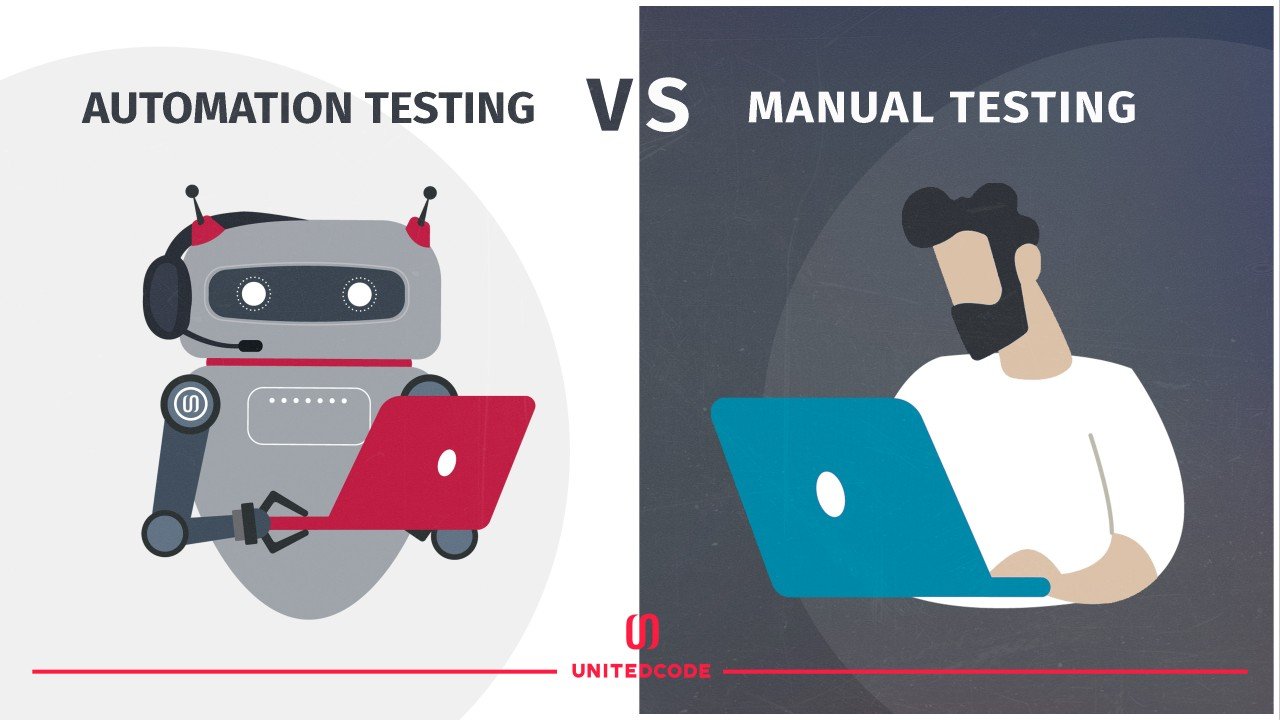
If you're looking into a QA career, you've probably already run into this debate. Half the internet tells you automation is the future and manual testing is basically dead. The other half insists manual testing will always be needed because "AI can't think like a human." Both sides are exaggerating a little.

Here's the more honest version: in 2026, most QA careers still start with manual testing, and most automation engineers working today started out as manual testers. These aren't two competing careers they're two stages of the same one. The real question for a beginner isn't "which one is better," it's "which one should I start with, and how fast should I move toward the other."
This article breaks that down clearly, including real pay differences, what each path actually looks like day to day, and how to choose your starting point without wasting a year on the wrong one.
What Manual Testing Actually Involves
Manual testing means exactly what it sounds like a person using the software the way a real user would, checking whether it behaves the way it's supposed to, and reporting anything that doesn't.
A manual tester's day typically includes:
- Running through written test cases step by step
- Trying to break a feature on purpose (edge cases, unusual inputs, unexpected clicks)
- Logging bugs in a tool like Jira, with clear steps to reproduce the problem
- Verifying that a fix actually works once a developer pushes an update
- Testing across different browsers, devices, and screen sizes
No coding is required. What's required is patience, attention to detail, and the ability to think like both a curious user and a suspicious one at the same time.
What Automation Testing Actually Involves
Automation testing means writing code that tests the software for you scripts that click buttons, fill forms, and check results automatically, often thousands of times faster than a human could.
An automation tester or QA automation engineer typically works on:
- Writing test scripts using tools like Selenium, Playwright, or Cypress
- Building and maintaining automated test suites that run every time new code is pushed
- Integrating tests into CI/CD pipelines so they run automatically, not manually
- Debugging failed automated tests to figure out if it's a real bug or a flaky script
- Working closely with developers, since automation code lives alongside the actual application code
This is, functionally, a coding job. You're not just testing software you're building software that tests other software.
The Pay Difference Is Real, and It's Growing
This is the part beginners need to hear clearly, because it changes how you should plan your first two to three years in QA. Manual testers in 2026 commonly earn between roughly $58,000 and $72,000 in the US, while automation engineers with similar experience levels are earning $92,000 to $135,000 for comparable seniority. Senior automation roles especially SDET (Software Development Engineer in Test) positions at larger tech companies regularly clear $160,000 base pay, putting them in range of senior software engineering salaries.

That gap exists for a simple reason: automation testing is coding, and coding skills get paid like coding skills. Manual testing is still valuable and still hired constantly, but it doesn't command the same ceiling on its own.
This doesn't mean you should skip manual testing. It means you should think of manual testing as your entry point, not your final destination, if long-term earning growth matters to you.
So Which One Should a Beginner Actually Start With?
For almost everyone starting from zero, the honest answer is: manual testing first.
Here's why. Manual testing teaches you how to think like a tester how to break a feature into logical test cases, how to spot edge cases a developer didn't think of, how to write a bug report someone can actually act on. Automation without that foundation just means you're writing scripts without understanding what you're really testing for or why it matters. A lot of people who jump straight into automation without this foundation end up writing tests that pass technically but don't catch real problems.
The realistic, proven path most working QA professionals follow looks like this:
- Start in manual testing and learn the fundamentals properly test case design, defect life cycle, bug tracking tools, SDLC basics.
- Get comfortable with the tools of the trade (Jira, TestRail, basic SQL for checking data).
- Begin learning automation concepts and a tool like Selenium, usually within your first 12–24 months.
- Transition into a hybrid or full automation role as your scripting skills solidify.
Skipping straight to step 3 without steps 1 and 2 is where most self-taught beginners struggle not because automation is impossible to learn alone, but because without manual testing fundamentals, it's very hard to know what a "good" automated test actually looks like.
Is Manual Testing Becoming Obsolete?
No but its role is shifting. Repetitive, scripted testing (the kind that gets run the same way over and over) is increasingly being automated, which is exactly what's driving the pay gap mentioned earlier. What's not going away is manual testing's role in exploratory testing, usability evaluation, and situations that require human judgment a real person noticing that something "feels wrong" even though it technically passed every test case.
The most effective QA teams in 2026 aren't choosing one over the other. They're combining both automation for scale and repetition, manual testing for context and judgment. That's good news for beginners, because it means there's still a real, stable entry point in manual testing. It's just not where you want to stay forever if you're aiming for the higher end of QA salaries.
What Skills You'll Actually Need for Each Path
For manual testing:
- Test case writing and requirements analysis
- Bug tracking tools (Jira, TestRail, Azure DevOps)
- Understanding of the SDLC and defect life cycle
- Strong written communication for bug reports
- Basic SQL for checking data-related issues
For automation testing:
- Everything in manual testing, plus:
- A programming language (commonly Java, Python, or JavaScript)
- A test automation framework (Selenium, Playwright, or Cypress)
- Familiarity with CI/CD tools and how automated tests plug into them
- Debugging skills to tell the difference between a real bug and a broken script
Notice that automation isn't a replacement skill set it's manual testing knowledge plus coding on top. That's exactly why starting with manual testing isn't a wasted step; it's the foundation the higher-paying automation roles are actually built on.
Can You Really Teach Yourself This?
Technically, yes there's no shortage of free tutorials, YouTube videos, and blog posts on manual and automation testing. But here's the honest reality most beginners run into: self-study alone works for some people, but it isn't the best or fastest option for most people, especially if you don't already have someone in the industry to check your work, correct your habits, or tell you which of the fifty things you're learning actually matter to employers.
Self-taught learners commonly run into the same problems: they don't know if their test cases are actually good, they can't tell if their automation scripts follow real industry practices, and they have no portfolio or mock interview experience to show for months of scattered learning. That's not a knock on anyone's ability it's just what happens when you're learning a practical, job-focused skill without structured guidance or feedback.
This is exactly the gap that structured training is built to close and it's the difference between spending six months guessing what to learn next, and spending six months building the exact skills employers are hiring for right now.
At Checkmate IT Tech (checkmateittech.com), our QA training is built around this real career path not just teaching manual testing in isolation, but preparing you for the natural next step into automation as well. Our Quality Analyst Manual Testing program covers test case design, the defect life cycle, and the exact tools recruiters ask about, with real instructor feedback instead of guesswork. Once you're ready to move toward the higher-paying side of QA, our Selenium Automation Training builds directly on those manual testing fundamentals rather than treating automation as a separate subject you have to relearn from scratch.
If you're also interested in the security side of testing an increasingly valuable specialization within QA our Security Testing program is worth exploring once you have your manual testing foundation in place. And students who want real-world exposure before applying to jobs benefit from our Live Project Support, which gives you actual project experience to talk about in interviews instead of only classroom exercises. If you're comparing paths across different tech tracks, our full course catalog makes it easy to see how QA fits alongside other options.
To be clear: this isn't about saying self-study can never work some people genuinely do learn this way successfully. It's about being honest that structured, guided training with real feedback and a placement-focused program will get most beginners to a job-ready, interview-confident place faster and with far less wasted effort than piecing it together alone. That's the entire reason training and placement institutes like Checkmate IT Tech exist to shorten that gap between "I want to learn QA" and "I have a job offer."
A Realistic Beginner Roadmap
- Learn manual testing fundamentals test case design, defect life cycle, SDLC basics, and bug tracking tools.
- Practice on something real a small app, a personal project, or a structured course project and build a mini portfolio.
- Get comfortable with basic SQL and one bug-tracking tool before you start interviewing.
- Apply for manual testing or QA analyst roles to get your first year of real experience.
- Start learning automation (Selenium or a similar tool) once you're comfortable with manual fundamentals ideally within your first year on the job or during training.
- Transition toward automation or SDET roles as your scripting skills grow, where the real pay jump happens.
Final Thoughts
Manual and automation testing aren't really rivals they're two chapters of the same career, and almost every successful QA professional has read both. If you're a complete beginner in 2026, starting with manual testing gives you the foundation that makes automation actually make sense later, instead of feeling like a completely separate skill you're learning from scratch. The pay difference between the two paths is real and worth planning for, but the good news is you don't have to choose one permanently on day one you just have to choose where to start, and commit to moving forward deliberately from there. Whether you piece that path together yourself over a year of trial and error, or move through it faster with structured training and real instructor feedback from a program like Checkmate IT Tech, the destination is the same. How quickly and confidently you get there is really up to which path you choose to walk it on.
Frequently Asked Questions
1. Should beginners start with manual testing or automation testing in 2026?
Most beginners should start with manual testing. It builds the foundational thinking skills test case design, defect analysis, requirements understanding that make learning automation later much easier and more effective.
2. Is manual testing still in demand, or is it dying out?
Manual testing is still in demand, especially for exploratory testing, usability evaluation, and situations requiring human judgment. What's declining is manual testing for purely repetitive, scripted checks, which automation now handles more efficiently.
3. How much more do automation testers earn compared to manual testers?
Automation engineers commonly earn $92,000–$135,000 in the US compared to $58,000–$72,000 for manual testers at similar experience levels roughly a 50–60% pay difference.
4. Do I need to know how to code to become a QA tester?
Not for manual testing roles. However, learning a programming language and an automation tool like Selenium is necessary to move into higher-paying automation or SDET roles.
5. How long does it take to transition from manual to automation testing?
Most working QA professionals make this transition within 18 to 36 months, though motivated learners with structured training can move faster.
6. What's the difference between a QA tester and an SDET?
An SDET (Software Development Engineer in Test) is typically a more advanced automation-focused role that blends software engineering skills with testing expertise, and it usually commands higher pay than a standard QA automation role.
7. What tools should I learn for manual testing?
Jira or a similar bug-tracking tool, TestRail or Azure DevOps for test case management, and basic SQL for checking data during testing.
8. What tools should I learn for automation testing?
Selenium, Playwright, or Cypress are the most commonly requested automation tools, typically paired with a programming language like Java, Python, or JavaScript.
9. Can I really teach myself manual and automation testing for free?
It's possible, but most self-taught beginners struggle without feedback on their work, a clear learning order, or a portfolio to show employers. Structured training with instructor guidance and placement support typically gets beginners job-ready faster and more reliably.
10. Is it worth taking a paid QA training course instead of learning for free online?
For most beginners, yes especially if you want real feedback on your work, a structured path from manual to automation testing, and placement support once you're ready to apply. Free resources can teach concepts, but they rarely replace guided, job-focused training when your goal is actually getting hired.