
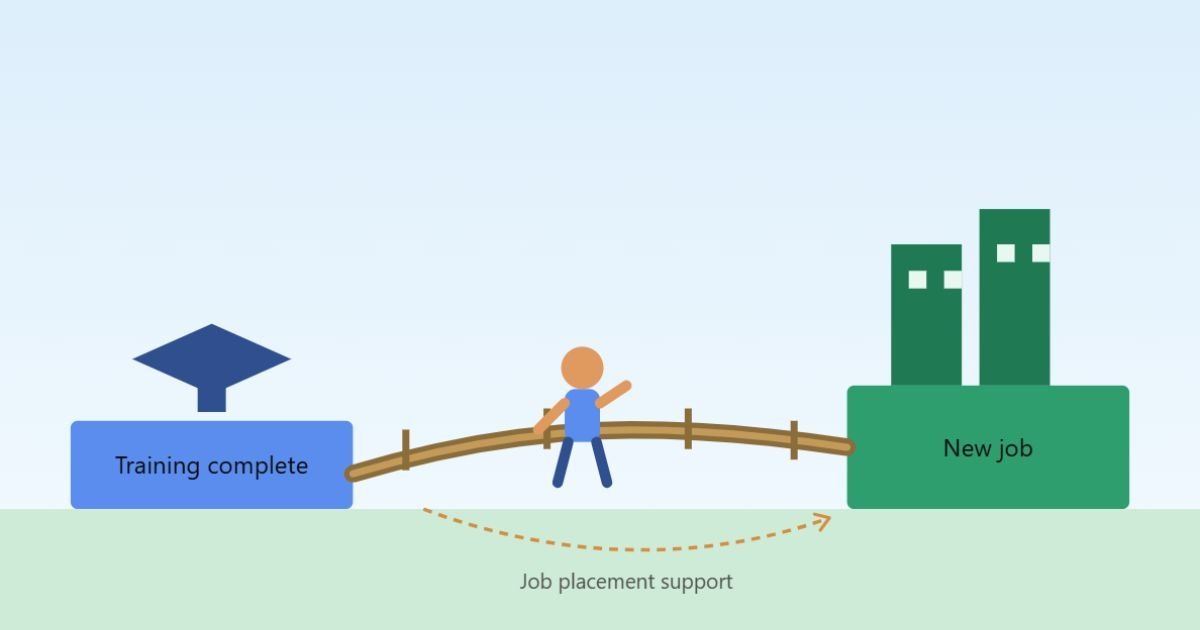
If you've ever finished a course, printed out a shiny certificate, and then sat there wondering "okay... now what?" you already understand the biggest gap in online education. Learning a skill is one thing. Actually landing a job with that skill is a completely different battle. This is exactly the gap that Job Placement Support at CheckmateITTech is built to close.

We're not writing this as a generic "trust us, we're the best" sales pitch. We're writing it because thousands of learners in Canada, the USA, the UK, Germany, and across Europe are asking the same honest questions: Will this training actually get me a job? Is there a real human helping me, or am I on my own after the course ends? What does "placement support" even mean in practice?
Let's break it down properly.
What Does Job Placement Support Actually Mean?
Before going further, let's clear up something a lot of people search for: job placement meaning in simple words, it means getting help to find and secure an actual job after you've completed your training, rather than being left to figure out the job market by yourself.
Similarly, when people ask what career placement mean, they're really asking: does someone actively help connect my skills to real employers, or do I just get a list of job boards and a "good luck"? At CheckmateITTech, career placement means the second half of the journey the part that starts right after your last class, not the part that ends there.
So in short: job placement support meaning = structured, hands-on help with resume building, interview prep, employer connections, and follow-up guidance until you actually get hired. It's not a certificate. It's a bridge.
Why Training Alone Isn't Enough Anymore
The IT job market in 2026 is competitive, and honestly, a bit brutal for newcomers. You could be an excellent Java developer, a sharp business analyst, or a solid QA tester but without someone guiding you through:
- How to write a resume that passes automated screening systems
- How to talk about your skills confidently in an interview
- Where the real openings are (not just recycled LinkedIn spam)
- How immigration, visa, and regional hiring rules affect your job search
...you can stay stuck for months. This is why CheckmateITTech built its training programs around a simple philosophy: teach the skill, then walk with the learner until they're employed. That's the entire point of having a job supporter built into the program instead of treating placement as an afterthought.
Meet the Idea of a "Job Supporter" Not Just a Trainer
A trainer teaches you React, Python, Scrum, or cybersecurity fundamentals. A job supporter does something different they sit with you after training and help you figure out your next real-world step. Think of it like having someone in your corner who:
- Reviews your resume line by line
- Preps you for mock interviews based on actual employer expectations
- Points you toward openings that match your specific skill level
- Keeps you accountable so you don't lose momentum after the course ends
This is the difference between a course that ends with "congratulations" and one that ends with "congratulations, and here's your first opportunity."
CheckmateITTech as Your Placement Agency
A lot of learners search specifically for your placement agency because they want reassurance that there's a real organization standing behind their job search not a random freelancer or a bot sending automated emails. CheckmateITTech operates with that same mindset: training and placement support under one roof, so learners don't have to juggle a training provider on one side and a separate job agency on the other.
This matters more than people realize. When your trainer and your placement supporter are part of the same organization, they already know your project work, your strengths, and your weak spots which makes the placement conversation much more targeted and honest.
The Job Canada Unit: Built for a Specific Market
Canada's tech hiring market has its own quirks provincial nominee programs, specific certifications employers expect, and a strong preference for candidates who understand Canadian workplace culture. That's why CheckmateITTech runs what many learners refer to as the job canada unit a dedicated arm of the placement team focused specifically on Canadian opportunities.
If your goal is job placement Canada, this unit is where the real work happens: matching your skill set to Canadian employer expectations, helping you understand what recruiters on jobplanet canada-style platforms and local job boards are actually looking for, and making sure your application materials are tailored for a Canadian audience rather than a generic global template.
It's Not Just Canada Jobs in UK, USA, Germany & Across Europe
While Canada gets a lot of attention, CheckmateITTech's placement support isn't limited to one country. The programs are designed for learners chasing jobs in UK USA Canada Germany & Europe countries, because tech hiring, while different in each region, shares a common thread: employers want proof of skill, a clean resume, and a candidate who can communicate clearly in an interview.

Whether you're aiming for a QA role in London, a business analyst position in New Jersey, a developer job in Berlin, or a support role anywhere in the EU, the placement team adjusts its approach based on:
- Regional resume formatting expectations
- Local interview norms and etiquette
- Visa and work-authorization realities
- Which certifications actually carry weight in that specific market
What Placement Support Jobs Look Like in Practice
So what does this actually look like day to day? Placement support jobs assistance at CheckmateITTech generally follows this flow:
- Skill assessment – Understanding where you stand after training, honestly, not just on paper.
- Resume and LinkedIn overhaul – Making sure your profile actually represents what you can do.
- Mock interviews – Real practice, real feedback, not just a checklist.
- Job matching – Connecting your profile to openings that fit your level, not just any listing.
- Application support – Help with cover letters, follow-ups, and communication with recruiters.
- Ongoing check-ins – Because the job search rarely ends after one interview.
This isn't a one-time email with five job links attached. It's a process because job hunting, especially for someone new to the field or new to a country, is rarely a straight line.
The Honest Pain Points Learners Actually Have
Let's be real about what people are actually worried about when they search for training + placement programs:
- "Will I actually get interviews, or just a certificate?" This is the single biggest fear, and it's a fair one. It's why placement support has to be built into the program from day one, not bolted on afterward.
- "I don't have local experience will anyone hire me?" This is common for newcomers to Canada, the US, the UK, and Germany. The right placement guidance focuses on transferable skills, project work, and how to frame your background so it doesn't become a dead end.
- "I don't know how to talk about myself in interviews." Many skilled people freeze up simply because no one ever coached them through it.
- "I'm applying to hundreds of jobs and hearing nothing back." Often the issue isn't the applicant it's the resume format, the platform being used, or applying without any human follow-up.

These are the real, searchable, middle-of-the-night worries people have and good placement support exists specifically to answer them, not dodge them.
FAQs About Job Placement Support
1. What is job placement support, in simple terms?
It's structured help resume building, interview prep, and job matching provided after training so you have real support finding employment, not just a completed course.
2. Is placement support only for people trying to work in Canada?
No. While there's a specific job Canada unit for Canadian opportunities, support also extends to those pursuing jobs in the UK, USA, Germany, and other parts of Europe.
3. Does career placement mean guaranteed employment?
No responsible provider should promise guaranteed jobs hiring always depends on the market, employer decisions, and individual performance in interviews. What placement support does guarantee is guidance, structure, and real effort toward that outcome.
4. What's the difference between a job supporter and a recruiter?
A recruiter usually works for the employer and is trying to fill a role. A job supporter works for you helping you prepare, apply, and present yourself in the best possible light across multiple opportunities.
5. Do I need prior experience to get placement help?
No. Many learners start with zero professional background in tech. Placement support is designed to help you build a story around your training, projects, and transferable skills.
6. How long does the placement process usually take?
It varies by market and role, but the honest answer is: it's rarely instant. It depends on your skill level, the region you're targeting, and how actively you engage with mock interviews and applications.
Final Thoughts
There's a quiet kind of stress that comes with finishing a course and not knowing what comes next. You did the work, you learned the skill, and now you're staring at job boards wondering if any of it actually matters to an employer. That feeling is exactly why job placement support exists not as a marketing add-on, but as the part of the journey that actually gets you across the finish line.
At CheckmateITTech, the goal isn't just to hand out certificates. It's to walk learners from "I just finished training" to "I just accepted an offer" whether that offer is in Toronto, London, Berlin, New York, or anywhere else across the UK, USA, Canada, Germany, and Europe. If you're currently stuck in that in-between stage, know this: the gap between skill and job isn't a personal failure. It's a structural problem and it's one that proper placement support is built to solve.
If you want to see how the training and placement programs actually work, it's worth exploring the CheckmateITTech website directly and talking to their team about what placement support would look like for your specific goals and target country.