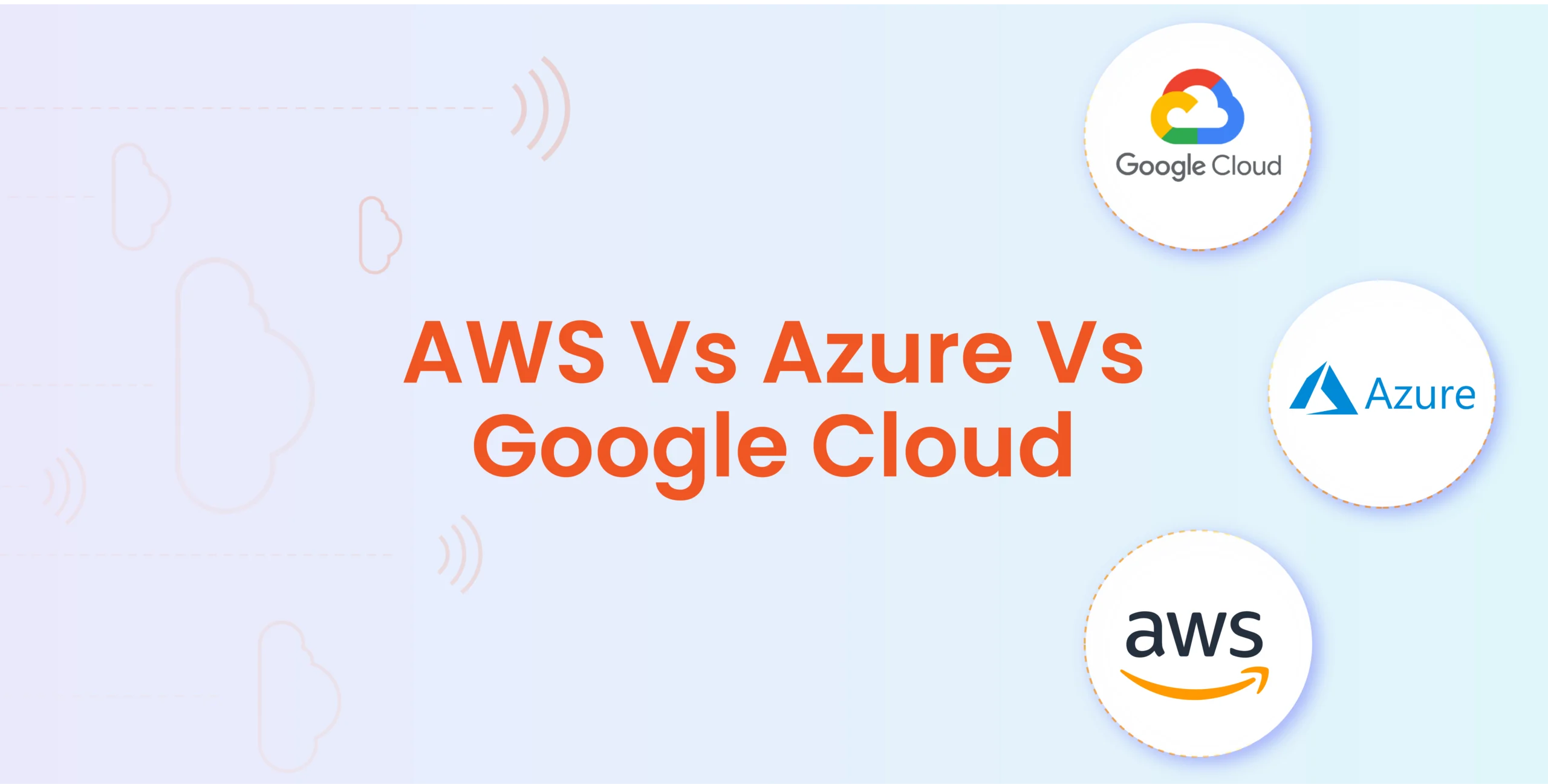
If you've decided to build a career in cloud computing, you've already made a smart decision. But then comes the confusing part which cloud platform should you actually learn? AWS? Azure? Google Cloud? Everyone online seems to have a different opinion, and most articles either give you a vague "it depends" answer or drown you in technical jargon that doesn't help you make a real decision.

This article gives you a straight answer based on actual 2026 hiring data market share, job posting numbers, and real salary ranges. And more importantly, it explains something most articles skip entirely: why the certification alone isn't what gets you hired, and what actually does.
At Checkmate IT Tech (checkmateittech.com), we've guided a lot of people through exactly this decision, and we've seen firsthand what separates the people who land cloud jobs from the people who pass an exam and then sit unemployed for eight months. We'll get to that. But first, the data.
The 2026 Cloud Market: Where Each Platform Actually Stands
Let's start with the numbers, because this is what drives job availability more than anything else.
According to Synergy Research Group data for Q1 2026, AWS holds roughly 30% of global cloud infrastructure spend, Azure sits at about 25%, and Google Cloud is at around 13%. Combined, these three control roughly two-thirds of the entire global cloud market.
But market share alone doesn't tell the whole story. Growth rates matter too, and here the picture flips: in recent quarters, Google Cloud grew revenue about 63% year-over-year, Azure grew around 40%, and AWS grew about 19%. AWS is the biggest, but the smaller players are growing faster.
What does that mean for you as a job seeker? It means all three platforms have real, growing job markets but they lead to slightly different opportunities.
Job Market Comparison: Which Certification Gets You Hired Fastest?

Here's where the practical decision gets clearer. Based on 2026 cloud job posting analysis:
- AWS is mentioned first in roughly 32% of cloud job postings the largest share by a wide margin
- Azure appears in roughly 24% of postings
- GCP appears in roughly 14%, with the remainder being "any cloud" or multi-cloud requirements
AWS: The Safest Bet for Job Volume
If your main goal is simply "get hired in cloud as fast as possible," AWS gives you the widest pool of opportunities. It has the largest market share, the most mature certification program with multiple levels, and the most job postings mentioning it by name. AWS also has the broadest service catalog 240+ managed services as of 2026 meaning more companies of more types use it.
Best for: Career changers, beginners, anyone prioritizing job volume and flexibility.
Azure: The Enterprise and Corporate Path
Azure's biggest advantage is something a lot of people overlook Microsoft's existing relationship with enterprises. If a company already runs Microsoft 365, Windows Server, and Active Directory (which describes an enormous number of mid-size and large businesses), Azure is the natural next step for them. That means Azure-skilled professionals are in strong demand specifically in large corporations, finance, healthcare, and government sectors.
Best for: Anyone targeting corporate or enterprise IT roles, especially in regulated industries.
GCP: Smaller Market, Higher Premium
Google Cloud has a smaller share of job postings but here's the interesting part: because fewer people are certified in GCP, certified professionals often command premium salaries. GCP Professional Cloud Architect consistently ranks among the highest-paying cloud certifications, with averages reported around $140,000 and some analyses placing it even higher.
The trade-off is simple: fewer total job openings, but less competition for each one, and strong pay when you land one.
Best for: People targeting data engineering, AI/ML, analytics-heavy roles, or anyone already comfortable with cloud basics who wants to specialize.
Salary Reality Check: What Cloud Certifications Actually Pay
Across multiple 2026 salary analyses, the pattern is consistent. Cloud-certified professionals earn a meaningful premium over non-certified peers reported anywhere from 15% to 40% more, depending on the source and role.
Some commonly cited 2026 figures:
- AWS Cloud Practitioner (foundational): around $85,000 median a realistic entry point for career changers
- AWS Solutions Architect Associate: around $130,000–$135,000 the most popular cloud certification overall
- Azure Solutions Architect Expert: around $160,000
- AWS Solutions Architect Professional: around $155,000–$165,000
- GCP Professional Cloud Architect: around $140,000–$180,000 depending on the source
And here's a detail worth planning around: professionals holding certifications across two platforms (commonly AWS + Azure) often earn an additional 10–20% above single-platform specialists, because roughly 92% of enterprises now run multi-cloud environments.
Now the Part Most Articles Won't Tell You
Here's the honest truth, and we'd rather say it directly than sell you a comfortable lie.
A cloud certification by itself does not get you hired.
Every year, thousands of people pass the AWS Solutions Architect exam through self-study watching YouTube videos, doing practice dumps, memorizing exam questions and then discover something uncomfortable in their first technical interview: they can answer exam questions but they can't actually do the job. They've never built a real architecture. They've never troubleshot a failed deployment. They've never explained a cloud cost decision to a manager.
Hiring managers can tell the difference within about ten minutes of a technical interview.
This is the single biggest reason self-study fails for most people. Not because self-study is lazy plenty of self-studiers work extremely hard but because studying alone gives you knowledge without context, and no way to know what you're getting wrong. You don't know which gaps you have, because you don't know what you don't know. And you have no one to correct you.
Why Structured Training Changes the Outcome
This is exactly the gap Checkmate IT Tech was built to close. Here's what guided training gives you that self-study fundamentally can't:
1. A clear, sequenced learning path. No more wondering whether you should learn networking first or jump straight into services. We've already mapped the order that actually works, based on what employers ask for.
2. Real hands-on projects, not just theory. You don't just learn what a load balancer is — you configure one. That's the difference between an answer that sounds memorized and an answer that sounds experienced.
3. Someone to correct your mistakes immediately. In self-study, a misunderstanding can sit in your head for months. In guided training, it gets fixed the same day.
4. Interview preparation that reflects reality. Passing an exam and passing an interview are two completely different skills. We prepare you for both.
5. Placement support. This is the part self-study can't replicate at all. Knowing the material is one thing. Getting your resume in front of the right people is another entirely.
If you're starting your cloud journey and want to see how these skills fit together, our full course catalog lays out how cloud, data, and automation skills connect into a real career path instead of a random collection of certificates.
For those leaning toward data-heavy cloud roles — which is where a large share of cloud hiring is concentrated in 2026 our Data Science training program and Big Data Analytics course build the foundation that makes cloud data engineering roles realistic rather than aspirational.
Since nearly every modern cloud platform now centers on AI and machine learning services, our Artificial Intelligence training program gives you the context that makes you far more valuable than someone who only knows how to spin up a virtual machine.
And because almost all cloud automation runs on scripting, our Python programming course is one of the highest-return skills you can pair with any cloud certification AWS, Azure, or GCP.
If you want to know more about who we are and how our training and placement process works before enrolling, our About Us page explains it clearly.
So Which One Should YOU Choose?
Here's our practical recommendation, based on where you're starting from:
If you're a complete beginner or career changer → Start with AWS. Most job postings, most learning resources, widest applicability. Begin at Cloud Practitioner level and move toward Solutions Architect Associate.
If you're already working in a Microsoft-heavy corporate IT environment → Go with Azure. Your existing knowledge transfers directly, and your current employer may even be hiring internally for these skills.
If you're targeting data engineering, AI, or analytics roles → Consider GCP, especially if you're willing to accept fewer total openings in exchange for less competition and strong pay.
If you already have one certification → Add a second platform. The multi-cloud premium is real and currently at its peak.
But whichever platform you pick, pick one and go deep. The most common mistake we see is people trying to learn all three simultaneously and ending up genuinely competent in none of them. One platform, learned properly, with real hands-on work behind it, beats three half-finished certification attempts every single time.
Final Thoughts
The honest answer to "which cloud certification has the best job market in 2026" is this: AWS has the most jobs, Azure has the strongest enterprise demand, and GCP has the best pay-to-competition ratio. All three are genuinely viable. There's no wrong choice here only a wrong approach.
And the wrong approach is treating a certification like a finish line. It isn't. It's a door, and walking through it requires hands-on skill, interview readiness, and someone who can actually connect you to opportunities once you're ready.
That's the difference between studying alone and training with a team that's done this before. If you're serious about building a cloud career in 2026 rather than just collecting a PDF certificate, Checkmate IT Tech (checkmateittech.com) offers structured training, real project experience, and placement support designed to take you all the way to a job offer not just to an exam pass. Reach out, tell us where you're starting from, and we'll help you pick the right path.
Frequently Asked Questions
1. Which cloud certification has the most job openings in 2026?
AWS leads by a clear margin, appearing first in roughly 32% of cloud job postings, compared to about 24% for Azure and 14% for GCP.
2. Which cloud certification pays the most?
GCP Professional Cloud Architect and AWS professional-level certifications consistently rank highest, with reported averages ranging from roughly $140,000 to $180,000 depending on the source and role.
3. Should a complete beginner start with AWS, Azure, or GCP?
AWS is generally the best starting point for beginners because it has the most job postings, the most learning resources, and the widest range of employers using it.
4. Can I learn cloud computing without an IT background?
Yes. Many successful cloud professionals started from non-technical backgrounds. What matters is a structured learning path and hands-on practice rather than prior experience.
5. Is self-study enough to get a cloud job?
It's possible but difficult. Most self-studiers can pass exams but struggle in technical interviews because they lack hands-on project experience and real-world context. Structured training with practical projects significantly improves hiring outcomes.
6. How long does it take to get cloud certified?
Foundational certifications typically take 4–8 weeks of focused study, associate-level certifications around 2–3 months, and professional-level certifications around 3–4 months.
7. Is it better to learn one cloud platform or multiple?
Start with one and go deep. Once you're job-ready on one platform, adding a second can increase earnings by roughly 10–20%, since around 92% of enterprises now operate multi-cloud environments.
8. Do cloud certifications actually increase salary?
Yes. Multiple 2026 analyses report cloud-certified professionals earning a 15% to 40% premium over non-certified peers in comparable roles.
9. What skills should I pair with a cloud certification?
Python scripting, Linux fundamentals, networking basics, and data or AI skills are the most valuable complements, since most real cloud work involves automation and data handling.
10. Does Checkmate IT Tech provide placement support with cloud training?
Yes. Checkmate IT Tech is a training and placement provider, meaning the goal isn't just helping you pass an exam it's preparing you for interviews and connecting you with real job opportunities.